

Access to quality healthcare that is also affordable was an extremely important factor when we started considering early retirement and a move abroad. Our 911 occupations in Oregon provided us with a “Cadillac Health Plan” and our employer paid the lion’s share of the expenses. We had become exceedingly spoiled, especially since we were double covered. We rarely paid copays for normal consults and often received reimbursement checks from Blue Cross Blue Shield. We also have an employee sponsored VEBA plan that we used to cover expenses such as Andrew’s LASIK surgery. Although we still have access to our VEBA accounts, we haven’t used them since retirement.
Just how expensive would private insurance and healthcare be in a new country? Based on pre-retirement research, we felt confident that healthcare in Portugal would be way less expensive than the United States. Andrew briefly covered this here in one of our early posts. We knew there would be access to both public healthcare and private hospitals/clinics. What we didn’t know was how easy or difficult it would it be to navigate a new system and locate the right doctors.
Andrew retired in May 2022 and before selecting his final work day, made sure to confirm with the Human Resources department how long our employee healthcare coverage would last after parting ways. We arrived in Portugal on June 20th and hadn’t made arrangements beforehand, so our first order of business was finding healthcare insurance. We needed to find new insurance before our existing policy ended in 10 days. In order to streamline the process, we used an insurance broker in Lisbon who provided us with multiple options. We scoured the fine print and chose a policy that made the most sense for us and our needs. Fortunately age was on our side and since neither of us had any significant pre-existing conditions, the process was pretty straightforward with a phone interview about our medical histories and some emails. We chose ASISA Advance Care based on coverage percentages and overall limits. The difference in cost between our insurance policy in Oregon and Portugal is staggering, but how much would we pay out of pocket for services?

We had succeeded in procuring insurance coverage and eventually obtained our SNS (Serviço Nacional de Saúde) numbers at the local health center in Olhão – this allows access to the public healthcare system. After several discussions, we decided to use private hospitals and clinics instead of the public healthcare system. There are often long waits and some health centers are hugely understaffed. We didn’t want to worsen a potentially overwhelmed system which many Portuguese people rely on. While this was a personal choice, it seemed like the most responsible one for us since we have other options and don’t need to use the public healthcare system.
Although we had been diligent about going for regular doctor and dentist check ups in the States, we were at a bit of a loss in terms of finding doctors in a new country. We also struggled with finding private facilities that accepted our insurance in Southern Portugal. After about a year, we reached out to our insurance broker and asked about switching insurance. She discouraged us from changing anything because our plan had no limits in several categories and if we let it go, we were unlikely to be able to get it back since similar policies weren’t being offered anymore (by almost any insurance companies). We were advised to see doctors of our choice and manually submit reimbursement requests. Since we didn’t have any pressing health concerns we continued to let doctor and dentist visits lapse, particularly since we had success in filling our medication needs without prescriptions. The first time I went to a Portuguese pharmacy to fill my thyroid meds, I just took my American prescription and they filled it. On subsequent visits I brought the box of meds with me to the pharmacy. I only had trouble once near the end of our time in Olhão when a pharmacist unhappily filled my request, but scolded that I would need a prescription from a Portuguese physician next time.
Several of our expat friends, some a bit older and others with significant health concerns, had contracted with Serenity which is a medical concierge service that assists with finding doctors, coordinating information between physicians, reviewing insurance coverages, and making appointments. Initially we decided against it, but by December 2023 since we had zero luck locating doctors and clinics on our own, we changed our mind and signed up for the service. We paid $377.87* for our annual memberships which was a discounted price because of a referral from our friend Karen.
Serenity contacted us by email, we filled out some medical history and were assigned a nurse case worker. Our first video call with our caseworker was thorough. We discussed our challenges finding doctors within our insurance network and explained that since we didn’t have a car we needed doctors and dentists that were close to us or easily accessibly via public transportation. After receiving a meeting summary and follow up plan by email, we were impressed. Objectives on the list included locating family physicians, ophthalmologists, dentists, several specialists, and making appointments. By mid January 2024 we received an email that our new primary care physician was in Coimbra. Ugh, that is 278 miles away from where we live and while we enjoy visiting our friends Randy and Corinne, we didn’t want to make it a regular habit in order to see our GP. I suppose we could have done video conference calls, but I preferred to see someone in person, especially since I hadn’t been to the doctor in quite some time and I wasn’t sure how my language skills would hold up. Maybe our Serenity caseworker was having the same difficulty we were in locating physicians that accepted our insurance. Had we made a huge error in holding on to this plan? Would we end up traveling long distances like many of our friends who frequently head to Lisbon or even Porto for medical services? We were disenchanted with the whole process and once again gave up on going to the doctor.
We started house hunting in the spring, and by June 2024 we had closed on our house in Urgezes. In July Andrew reached out Serenity by email to discuss our relocation plans and confirm our outstanding needs. On July 24 we had another conference call with our caseworker who is located in Lisbon. She confirmed that she indeed had experienced difficulty locating physicians in the South, but felt confident she could find what we needed in Guimarães. By August 6 we had a full list of GPs, specialists, and dentist recommendations in the North. Thank goodness we finally seemed to be getting somewhere. We selected our respective doctors, confirmed our planned move date and our first appointments were scheduled for the beginning of October. Although we felt sad and disheartened about the apparent inequality in healthcare throughout the country (or at least with our insurance coverage) we felt good about our decision to move North.
Our Hospital of choice is Hospital da Luz Guimarães which is about 4.5 miles round trip on foot from where we live. All of our physicians and tests, other than our dentist, are located in the same facility which is a brand new experience for us. When we lived in Medford, OR we went to several different clinics and hospitals in order to fulfill all of our needs. Hospital da Luz has an app which offers easy breezy access to exam results, upcoming and past appointments and a bevy of other information. After not seeing any healthcare professionals for over 2 years, we have definitely made up for lost time since October. I have seen my family doctor twice, been to a gynecologist, had several consults with an orthopedic surgeon, multiple blood panels, ultrasounds, an MRI on my knee, and even my first colonoscopy (eek). Andrew has seen a dermatologist, family doctor, had multiple blood panels, an EKG, and purchased new bifocals. We share an ophthalmologist and a dentist and have been impressed by the care thus far. Going to the dentist was different than any other dentist visit ever and we should really discuss it in further detail!

Even though our health has been good, we made some new discoveries. We are both genetically predisposed to high cholesterol and now take cholesterol meds. I confirmed that my problematic knee was due to a torn ACL which has been surgically repaired! I’ll discuss my pre and post surgery journey in another blog or two. Knee surgery and rehab has been part of the reason our posts have been inconsistent of late.
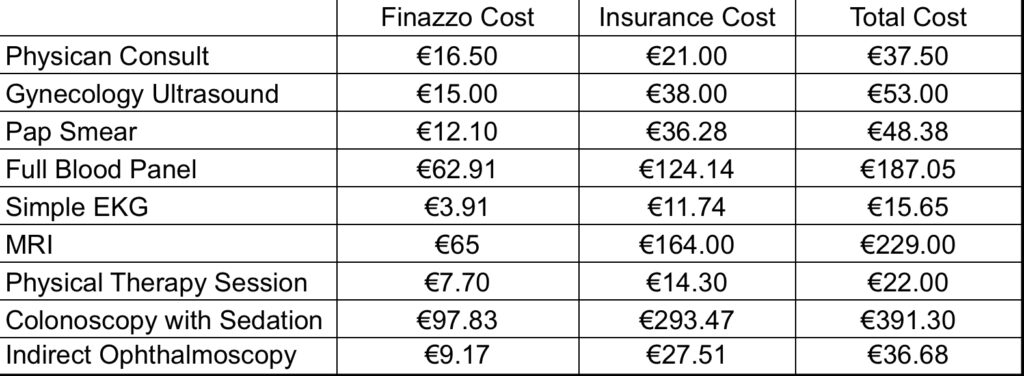
In conclusion, we are extremely thankful we kept our insurance – big props to that broker who gave us great advice, since the coverage seems awesome and Hospital da Luz is fully in network. We almost always pay a copay, but overall costs are nowhere near what they would be in the States. By December 2024 we felt confident enough in our ability to navigate our way through the private healthcare system that we cancelled our Serenity membership. While their initial research and physician recommendations were priceless, we didn’t see much benefit for us going forward. I’ve included some procedures and their fees based on some of our appointments at Hospital da Luz.
On a side note, after several visits to our new pharmacy in Urgezes, I highly doubt I would be able to obtain medications without a prescription. Initially they asked for my ID (which never happened in Olhão) and now they have an electronic file of my history. They are friendly and helpful, but very professional and give the impression of doing business “by the book”. This is not a criticism, just an observation since it is pointedly different from our previous pharmacy interactions. If you are curious about other specifics or have any questions, please post in the comments and we will answer to the best of our ability.
*EUR to USD conversions based on 2/15/25 rates


4 responses to “Navigating Healthcare Abroad”
I was wondering what thyroid condition you have and how you discovered it. Sincerely, Aunt Peggy
When my Family Nurse Practitioner (FNP) retired in June of 2015, the first person I saw as a potential replacement did a blood work panel which came back with low thyroid levels (hypothyroidism). I remember using the excuse of not liking her as reason to discredit the information. When I found a primary care provider that I did like, maybe because she was friends with my old FNP, a second round of bloodwork confirmed the results and I started taking Levothyroxine in December of 2015. I also had an ultrasound of my thyroid in Portugal, and I don’t have any nodes or cysts, it is just a bit small in size. Initially I thought my condition was genetic because my paternal grandmother also had a low thyroid, but after speaking to several coworkers at 911 when I was diagnosed, it was shocking how many had some form of a thyroid disorder – both high and low (I think someone should do a study). Thanks for the question Aunt Peggy!
The difference in price just shows how broken our healthcare system is over here. The billed charge for Michelle’s last MRI was $3,149 for the scan plus $333 for the image interpretation.
That is absolutely insane! One huge difference we have noticed is that almost all appointments are one on one with the doctor. Nurses and physician assistants aren’t really involved, unless you are having bandages changed or something specific done like eye tests before you see the ophthalmologist. I have had several ultrasounds and the physician gives you feedback right away at the appointment. I am so glad to hear that Michelle is doing well.