
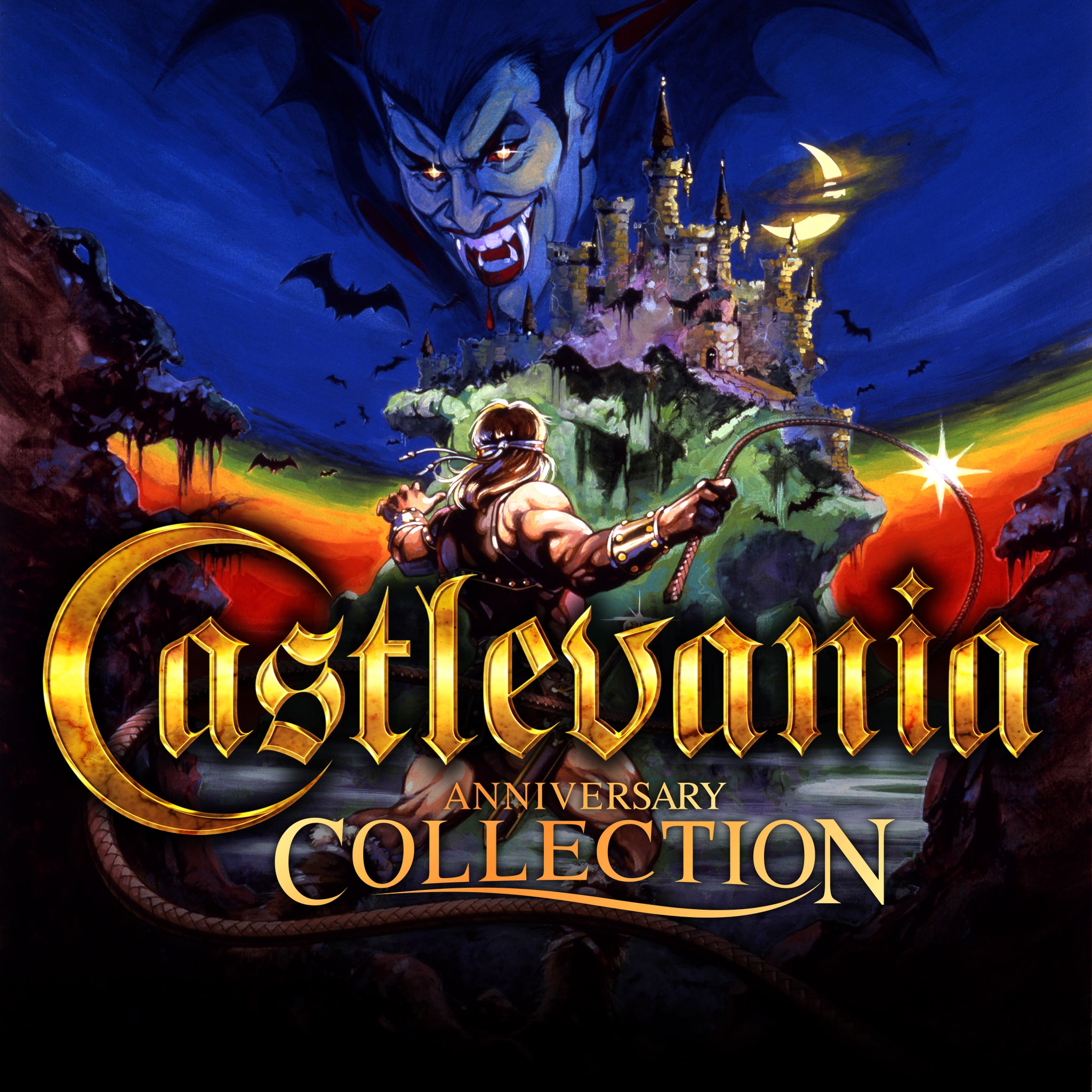
As Halloween approaches Michelle and I have decided to follow the Belmont clan in their eternal struggle against Dracula and his evil minions by playing through some of the many Castlevania games. These games eventually morph into one of my favorite genres, Metroidvania games, but we are going to start at the beginning with 1987’s Castlevania or Akumajō Dracula in Japan.
Konami started producing games around 1977, with many of their early works being clones of other people’s games. In 1981 they produced Frogger, published by Sega, 1983 saw Track & Field storm arcades, and by 1985 they were putting out a variety of space shooters and other popular games. In 1986 the original Castlevania was released for a more obscure Japanese video game system before being ported to the Nintendo Entertainment System in Japan in 1987 and the United States in 1988.
Michelle and I will be playing most of these games on the Nintendo Switch where they have been rereleased in collections. These collections feature save anywhere capability and we will be using that with no shame!
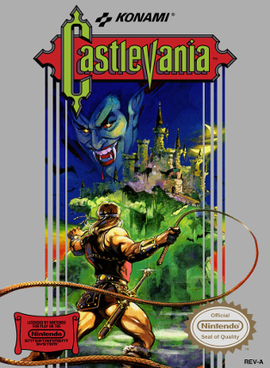
Castlevania
Inspired heavily by horror films, director Hitoshi Akamatsu wanted to make players feel like they were immersed in a movie. Nintendo’s 8 bit graphics limited the immersion but not the success of the game which would go on to spawn numerous sequels, spin offs, and even other types of media like the excellent anime adaptation on Netflix.
I got my NES in 1987 on my tenth birthday and played a large variety of games. the Mario and Zelda series were my favorites but Contra, Punch Out, and Bionic Commando all made early impressions on me. I definitely remember playing Castlevania but it didn’t sink its teeth into me (I’ll avoid too many bad dracula jokes). This was partially because I was a fan of Ghosts ‘n Goblins which I think had the graphical upper hand at the time, but wouldn’t evolve as a series like Castlevania did.
Story: It is 1691 A.D. and you control Simon Belmont. One hundred years ago your ancestor Christopher defeated Dracula but the evil has risen again (supposedly on a 100 year cycle). The player guides Simon through 18 levels inside Dracula’s castle, killing hundreds of minions and five bosses before finally vanquishing the great evil at the end of the game.
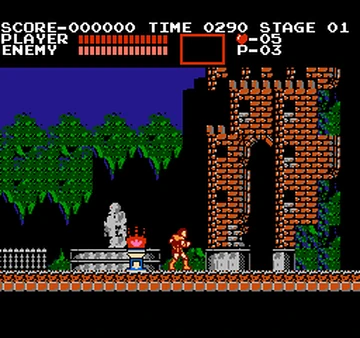
Gameplay: This first game clearly took inspiration from the shooters and arcade games of Konami’s recent past. You have a limited number of lives (but thankfully can continue if you run out), the main collectibles are score based which doesn’t really make sense in an adventure game, and everything is a bit too hard. Simon’s main weapon is a whip, called the Vampire Killer and you can also collect one subweapon. The subweapons are varied and include a time stopping pocket watch, a boomerang type cross, holy water, throwing knives, and axes. These secondary weapons require hearts to power up which you collect from destroying monsters or breaking candles throughout the castle. For some reason the whip can be powered up twice but this happens almost instantly when you break a couple candles and could have been excluded.
Every third level ends with a boss monster. Most of these are based off of classic movie monsters such as Frankenstein, The Mummy, and the Grim Reaper. The controls are responsive but you are locked into a specific jump animation and the whip has a windup which takes a little time to get used to. Most basic monsters take a single strike of the whip to vanquish so they aren’t that tough, but many move in a way which makes them impossible to easily hit or avoid.
Back to the bosses. These are some of the most rage inducing and difficult enemies imaginable. For example, Frankenstein shambles towards you but for some reason has a tiny attacking flea friend who flies around the screen and throws heat seeking fireballs at you constantly! The flea is also invulnerable.
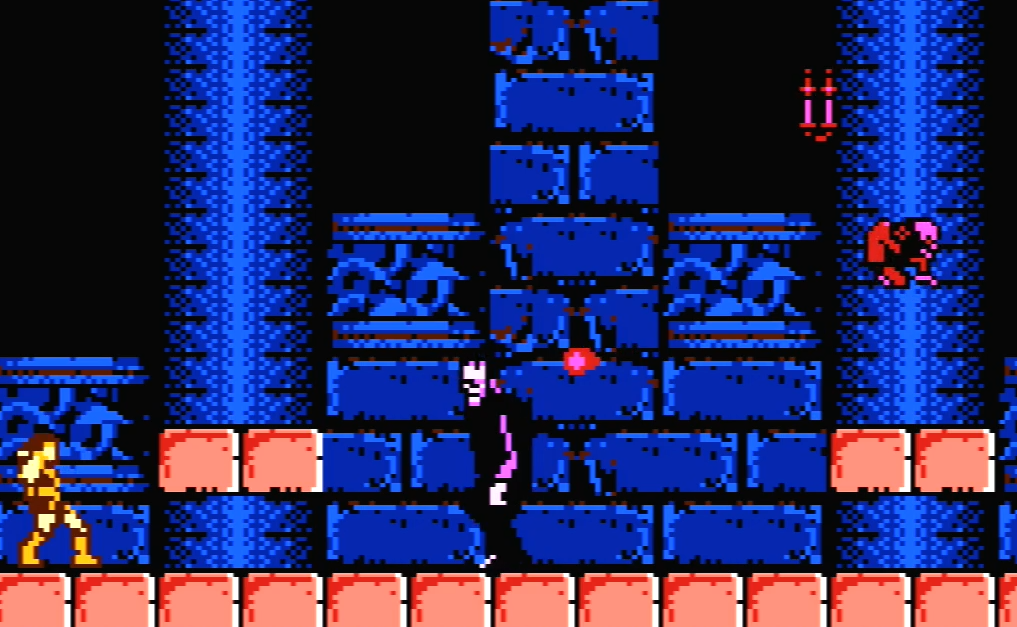
Everything culminates with the two phase Dracula fight. The harder phase (if you are prepared) is the first one. Dracula teleports around the screen, often appearing directly on top of your character, briefly materializing to throw three fireballs at your face. The only time he can be hit is while he shoots fireballs and the only place he can be hit is in the head. This may sound simple, but it is an insane challenge. IF you brought the holy water subweapon his second phase is not nearly as difficult.
Review: I think this original entry in the series is an interesting time capsule of its time, but isn’t a very enjoyable game due to high difficulty and frustrating mechanics. The arcade components don’t make much sense, why does Simon constantly run the risk of losing his powers and upgrades and why is he always trying to improve his “score”? On the other hand, storywise it perfectly sets things up for eternal invasions of Dracula and his many, many minions. The game closes with Dracula releasing a curse upon Simon Belmont!
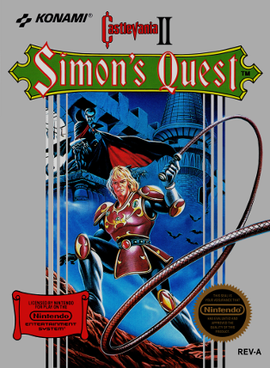
Castlevania II: Simon’s Quest
Released on the NES a year after Castlevania, the second entry in the series was extremely innovative and not afraid to change things up. This was a common theme with Nintendo sequels including Super Mario and The Legend of Zelda.
Story: Seven years after the first game, Simon Belmont sets out to cure the curse Dracula set on him at the end of the first game. In order to do this he must travel through various manors and villages collecting five pieces of Dracula’s dismembered body, then return them to the count’s castle, bring him back to life and kill him again. No problem!
Gameplay: Simon’s Quest retains the basic jump, attack, and subweapon setup from the first game. The game, however, is built on role playing mechanics and ideas that were relatively new in the industry (other games definitely had them at the time, but designers were still experimenting).
You start out in a town and can speak to villagers. Some will sell you things, most give you vague hints, and if there is a church a priest will heal your wounds. One villager very early tells you to be cautious because some people will lie to you. In the original Japanese text every villager basically lies, but this was considered too challenging so in the English text only some people lie. But you can’t tell who is a liar so it all ends up a meaningless jumble that is actually harder to decipher!
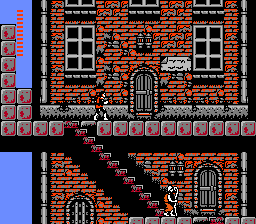
Most of the tips are references to specific towns (“You can get a better whip in Chicago”) but you don’t have a map and the signs within towns never say the town name. This renders most of the dialogue component in the game unusable.
Next is the bigger problem – this game relies on obscure mechanics that are virtually impossible to figure out through gameplay. In the first town you can buy a crystal which your character can equip and wear, but it doesn’t seem to do anything. Obviously you would normally choose to wear something else, like Dracula’s rib which acts as a shield. BUT, the only way to progress in the game is if you have upgraded the crystal to the correct level, equip it, and kneel for about two seconds at specific spots. For example, there is a dead end with a cliff, if you kneel with a red crystal a tornado will appear and take you to a different area.
Other secrets involve dropping garlic on the ground in random spots and holding Dracula’s heart while talking to a ferryman. Things you would literally never do naturally. The series always has breakable and invisible walls, but Simon’s Quest relies on these in both obscure and inane ways. My favorite example is that after you get holy water (which can break walls) every single shopkeeper hides behind a hidden wall in their store for the rest of the game.
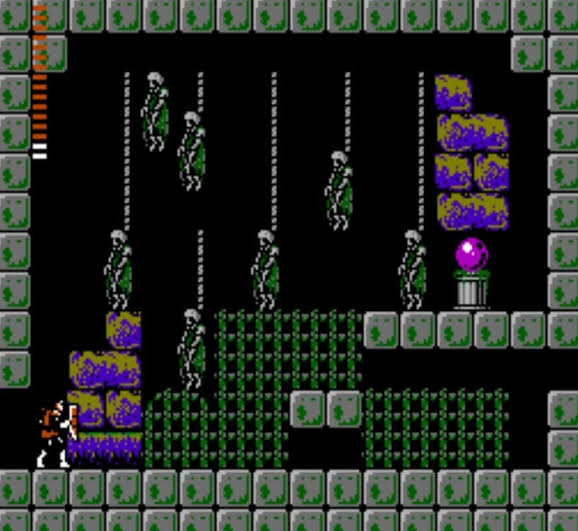
Unfortunately, the problems don’t end there. The game lets you gain experience and get some extra health but it is a rudimentary system and you only actually improve by advancing to new areas. To get the better endings of the game you have to beat the game quickly, and nothing else matters. There are fewer bosses then the previous game and instead of being too hard they are so simple to defeat they seem like an afterthought.
Review: I can’t help but love the imagination and groundbreaking ideas included in Simon’s Quest, but playing the game is tedious and silly. Thankfully a lot of the ideas introduced in this game will eventually be reimagined to change the series into one I truly love and enjoy playing.
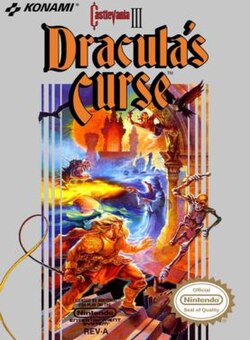
Castlevania III: Dracula’s Curse
This is the third entry in the series and was released in 1990 in the United States. It continued to be directed by Hitoshi Akamatsu and he brought the series back to the original style of the first game.
Story: In 1476 (well before the first game) Trevor Belmont is called upon to save Europe from an invasion of monsters led by Dracula. Trevor can be joined by one of three ghost comrades (a sorceress, a pirate, or a dhampir (Alucard who is Dracula’s son)!
This entry has improved graphics and more clearly displays its homage to cinema, especially in the opening scenes.
Gameplay: Jump, whip, and secondary weapons powered by hearts continue to be the staples of gameplay. When you defeat one of the ghosts you can choose to have them join you and can then change to them and use their ability. We never tested the sorceress but the pirate has a tiny dagger (that is very hard to use) and can climb on walls and ceilings. Most of our playthrough we used Alucard who can shoot fireballs and turn into a bat. It seemed appropriate to bring him with as we tried to vanquish his father.
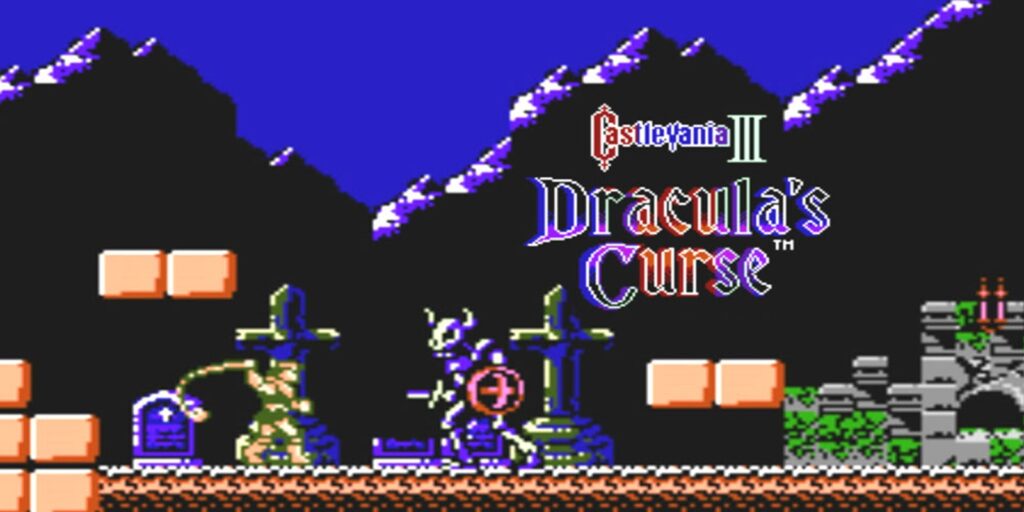
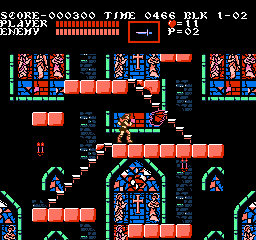
The game has sixteen stages basically set up in two routes and on any given playthrough you will see nine or ten of them. The route you take also decides which ghosts you will encounter and potentially join forces with. Some of the stages now scroll vertically and often include frustrating instant death sections which can be hard to predict.
Review: Castlevania III is a lot of fun and a huge improvement over the first two games in the series. It is still difficult and I would break some controllers if I had to play it without extra saves. Deaths can feel extremely cheap and a few areas mix tricky jumps with unpredictable enemies past the edge of a reasonable challenge.
The Plan: So far we’ve played the games in order, but we have a lot of games to go and they are about evenly split between Classicvanias and Metroidvanias. The first three games (and many of the other early entries) are Classicvanias – even Simon’s Quest but that’s an edge case. These games are more linear and have the player navigate a series of levels, usually crossing left to right or up and down through an area before moving on. Character growth is limited and often lost upon death. Metroidvanias involve more item based character improvement and exploration involving unlockable movement abilities.
The plan is that Michelle and I will alternate between the two types going forward and I’ll blog about them as we play through each one.
Castlevania: Circle of the Moon
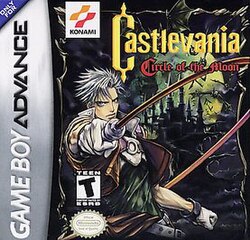
For our next game we will jump forward to 2001 and a game originally released for the Game Boy Advance. Mechanically things really start getting mixed up here so let’s get right into it!
Story: This is a standalone entry in the series and does not feature the Belmont clan of vampire slayers. The game is set in Europe in 1830, ten years after Morris Baldwin had defeated Dracula along with two other vampire hunters. Now a cultist named Camilla is working to release Dracula and Morris races to the count’s castle to prevent this, along with his son Hugh and Nathan (the orphaned son of the other vampire hunters I mentioned earlier). Camilla has set a trap and captures Morris, intending to use his essence to release Dracula and throws the two young men into the depths below the castle.
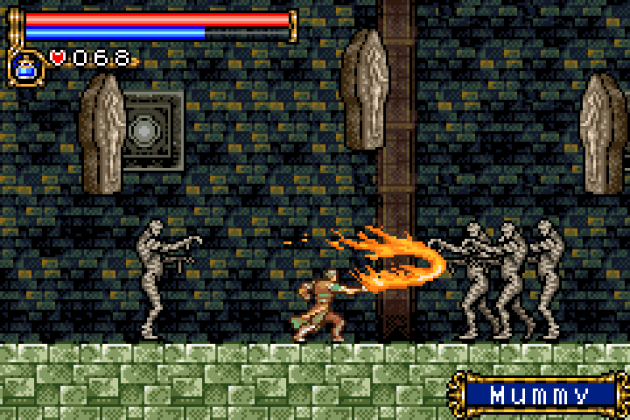
Hugh immediately abandons Nathan as he strives to claim the glory of saving his father and vanquishing Dracula. This leaves Nathan who the player controls through the game as you explore the castle, gain new gear and magical powers, level up, and eventually save the day. There is some fun drama and small cut scenes between the player and Camilla and of course the vain Hugh who falls to the temptations of evil and needs to be whipped back to his senses.
Gameplay: After working through three more routine games Michelle commented that we didn’t transition to exploring and using all the new options as efficiently as we should have, and I agree wholeheartedly. Circle drops the player into an open area limited only by their mobility options. For example, in the beginning you can barely jump onto a small ledge so anything higher than that is blocked off. Nathan wields a whip, but not the Vampire Killer, this iteration is known as the Hunter Whip. Killing enemies gives you experience which leads to level ups, improving your attack, defense, magic, health, and heart capacity.
Enemies can drop equipment and the player can wear three pieces of armor at a time (one chestpiece and two arm options). These normally increase your defense but can also upgrade other stats. Items like health vials, meat, and magic replenishers are also available, but quite rare.
Finally, certain enemies drop magical DSS cards. There are 20 cards total split into two types and the player can mix and match two at any time (for 100 possible combinations). This is where we really didn’t adapt well, as we should have always been actively using DSS. This system was quite innovative so I’ll go into a bit of detail about it.
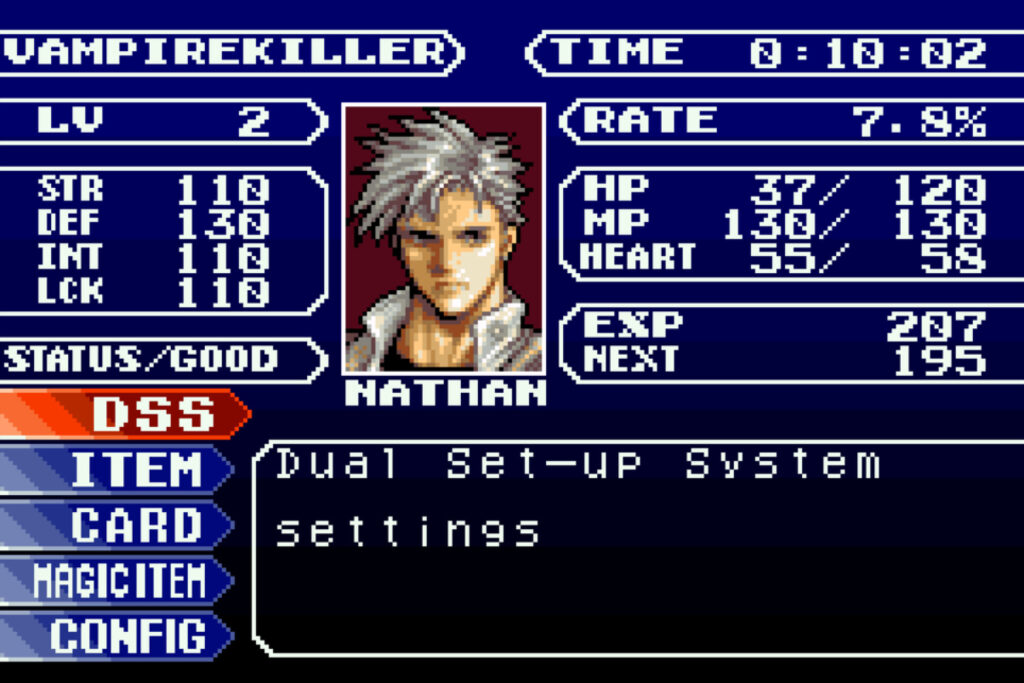
The first set of 10 cards each are a category, like whip improvements, stat improvements, magic spells, or summons. The other ten cards are different elements like fire, ice, dark and light. So if your DSS combination is a whip improvement with ice then your whip attacks will freeze enemies (making them climbable!) and each strike will use a little of your magic. Summon plus electricity will make it so a crow follows you around and electrocutes any enemy it touches. Unfortunately some of the really cool combinations only unlock late in the game and don’t get used much because of that.
You also have a map (something that was really needed in Simon’s Quest) which upgrades automatically as you explore the castle. Because you can’t access various places the first time you go there you will have to backtrack a lot, plus lots of walls have hidden entrances which you can kind of guess about after the surrounding areas are filled in on the map. Since the player always gains experience and movement goes more quickly as you add abilities the exploration stays interesting. Eventually teleporters can be found but they are quite inconveniently placed.
Review: This was a fun start to the Metroidvanias that we will be playing. The game is quite a bit longer than any of the earlier entries but is chock full of things to do and explore. One interesting thing is that the game lets you explore places you shouldn’t really go through. For example one area has poison water covering almost all the floors (and ice throwing witches who will freeze you). We forced our way through, running and jumping over huge pools of poison, eventually working our way to the boss and a great new ability. The game intended us to go a different direction and find an item which removes poison from water. I LOVE when a game allows you to break up the normal sequence through perseverance and hardheadedness.
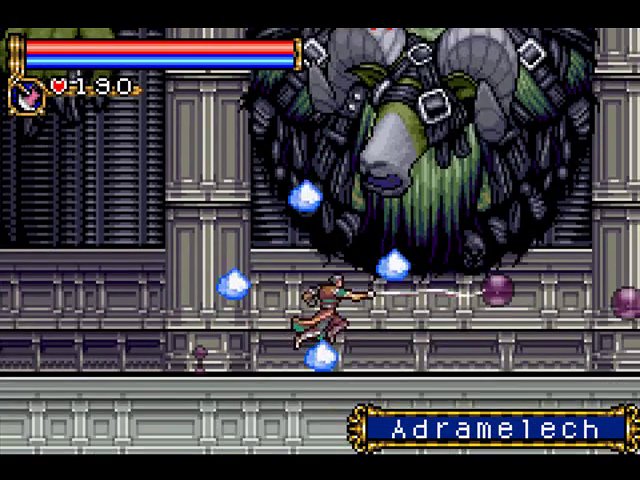
Michelle didn’t love the graphical style but I think it is a good mix of the classic monsters and modern color palates. Part of the problem is that we are playing the game on a full sized modern television and it was originally on a 2.9 inch display! My biggest gripe would be that the armor pieces were basically simple stat upgrades and not ever that interesting. I’m sure that during the game design process the balance of armor versus DSS abilities came up, but it would have been awesome if somehow you could instill certain pieces of armor with the more passive DSS abilities. The process of flipping between abilities was also a bit fiddly.
Another positive thing about the open ended game design is that there were very hard bosses, but you always felt like you could prepare for them by leveling up, finding better armor, and using the right DSS combination. One boss had a horrible bubble attack that impeded everything you did, but once I turned on four ice orbs that protected Nathan from low hitpoint enemies I could focus on taking the boss out quickly with the trusty Hunter Whip. Which reminded me that the whip attack can be held down to do an amazing windmill maneuver which clears any tiny garbage in your vicinity. And you can do a slide attack by default!
Fin!
I had a blast with this one. Now we head back to a retelling of the very first game by playing Super Castlevania IV.
Have you played Castlevania or any of its sequels? Maybe you have a different Nintendo series which you have fond memories of? Join us in the comments because we’d love to hear all about it!


One response to “Demon Castle Dracula!”
What I love and something I now realize I never thought about when I was younger was actually finishing a game. It just never was a thought. It’s so awesome hearing you two doing this and finishing each game. Love it.