
Our board game club, Board Guimas, has a relatively active user group that talks about all things game related. A couple weeks ago one user commented about which gateway game was the most interesting (in their opinion) of the most popular five. This coincided with some similar discussions I’ve had with Michelle and another friend recently and became a daily rumination or earworm for me. Today I hope to evict this nagging thought in the best way possible, by blogging it out!
Before I respond to the specific comment I’m going to talk about what the term gateway game means to me, take a trip back through some of my personal board gaming history, and discuss how these games should fit into your gaming collection. Three caveats: this will be a VERY nerdy discussion, I will likely come off as an old man yelling at the clouds, and finally my observations are based on my experiences and will definitely reflect my upbringing in the United States.
In 1975, two years before I was born, Professor Denise Kandel published her paper on the gateway theory which hypothesized that tobacco use increased a person’s propensity to eventually use hard drugs. In the 1980’s this theory (which is widely disputed) was shifted to demonize marijuana which popularly started being referred to as a gateway drug. Most people recognized the silliness of it and the term gateway started jokingly being used for all different things, for example someone might say “Don’t let your kid watch Voltron, it’s a gateway cartoon that will lead them to anime and eventually tentacle porn!”

Board gamers started using the term around 2000, referring to games that could be used to hook casual gamers and make them hard core board gaming addicts. The games in this category tend to have easy to learn rules but can be eye opening as to what modern games offer in terms of strategy and fun. Personally, I see a gateway game as the specific game that grabs a person’s attention and flips the switch, making them want to play and explore boardgames with a burning passion. Like marijuana supposedly makes some people spontaneously into crack addicts.
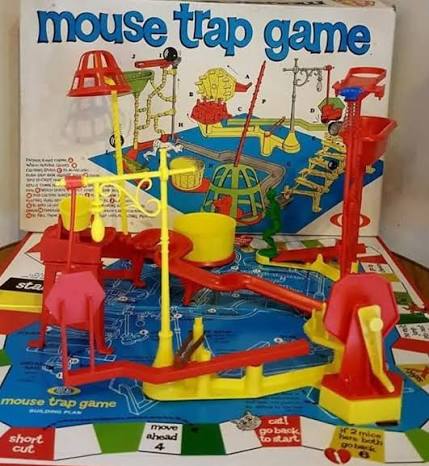
I slipped a bonus term in there which is at the heart of my complaint about the modern use of the term gateway game – casual gamer. A casual gamer in the United States in the 1990’s had likely grown up on a specific set of children’s games including The Game of Life, Uno, Risk, Checkers, Yahtzee, and of course Monopoly. As that child got older they started playing some games with their older family members like Trivial Pursuit, Chess, Scrabble, Axis and Allies, Taboo, Backgammon, Scattergories, Pictionary, and a variety of card games like Hearts, Spades, 500, Gin Rummy, or even Bridge.
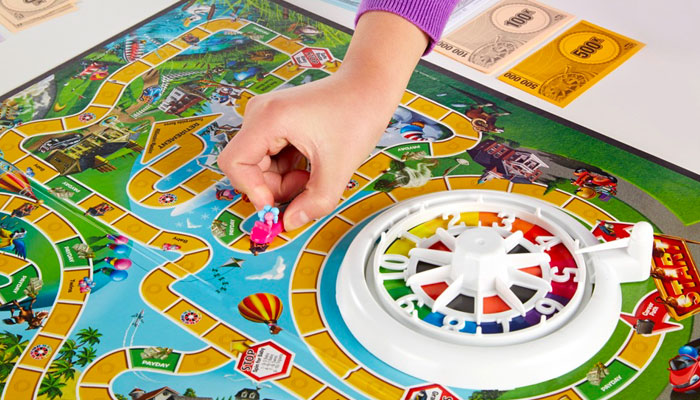
I wouldn’t disparage most of those games and would gladly play them today, in fact many are still in our collection. Some of them, especially Chess, are as strategically deep as almost any game in existence. The Axis and Allies rulebook is over 30 pages long. These games were just the normal things a person would play with their friends or families. I believe that a lot of people who “hate games” that are my generation or older feel that way because they were forced to play a handful of these options and didn’t have fun concluded that board gaming overall was a waste of their time.
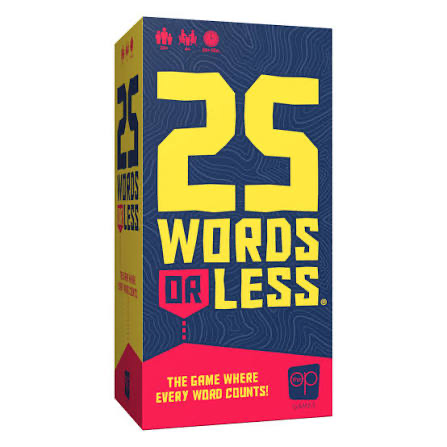
Before I talk about my ultimate gateway game, I want to divert to Michelle for a second. She played some of the old standbys in her youth, The Game of Life, Monopoly, and maybe some Twister, and various card games like penny Poker thrown in for good measure. When she started playing (tolerating) games at my parties around 1999 her gateway game moment came before mine with the wonderful word/bidding game 25 Words or Less. Unlike Taboo or Scattergories this game added multiple levels of strategy including bidding against the opposing team and carefully (but hurriedly) presenting well crafted clues.
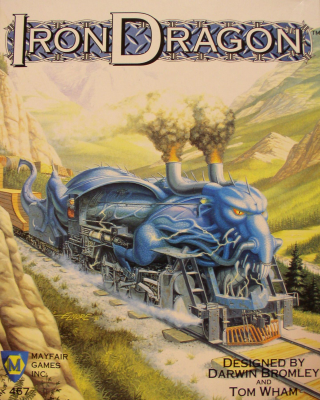
I played a lot of games growing up including, Magic: the Gathering in the early 90’s, all the games I listed above, and many more. When I moved out of my parent’s house in 1995 and arrived in Minnesota, I started buying new games to create my own collection. I’ve always loved games and would host game nights but would say that I was still an avid, but casual board gamer. I came close to being gatewayed by the railroad building game Iron Dragon but my transition wouldn’t truly happen until the early 2000’s.
After Michelle and I moved to Oregon we started making new friends and needed to add some games to our collection. Board Game Geek had been online for a couple years and I thought “why not buy the #1 game in the world”? At the time that game was Puerto Rico which was ultimately my gateway game. Unlike the strategy games I had played before, this one felt like almost a totally different game every time I played. There were so many different ways you could approach the game and you were forced to try different ideas as you reacted to other player’s decisions.

These games led to us having a collection of well over 300 board games, 1000’s of hours of fun, and countless amazing friendships. But, almost nobody would put either of these games onto a list of potential gateway games. 25 Words is too simple and too much of a party game, Puerto Rico is too complex. This is the root of the problem with the very concept of “gateway games”. The exact game that will “make an addict” varies from person to person.
The root of the problem is that people are actually looking for what I will call a silver bullet game. One of the hardest parts of this hobby is finding the right group of people to play the game YOU want to play when you want. A silver bullet game is one that you can play with almost anyone and there is a good chance they will have a fun time and want to play another round or, maybe, try another game of yours. You can shoot the SBG at your mom or your friend who hates games or that coworker who needs your help to log into their email every single day and they can play it and will probably have fun.

These games are light-medium difficulty with bland themes and usually about a one hour playtime. They can be taught to a new player in less than 10 minutes and have a strategic depth that can be understood in 2-3 plays (that is not to say they can be mastered that quickly).
Gamers who have been gatewayed tend to clutter their collection with too many of these games hoping they can be used to pull many other people into the hobby. Unfortunately this pitfall can lead to those gamers having to play games they don’t necessarily love more often than they actually want to and might even stagnate their passion for the hobby in general. One quick caveat – if your favorite games are light-medium weight games then of course you should own many different games in this category, I’m not disparaging that class of games in any way and love many of them.
When building your collection pick one to three SBG’s that are simple enough for anyone to play that you don’t mind playing on repeat. When you find someone who seems potentially passionate about the hobby, don’t pull out one of these standbys, instead pull out a game you are truly excited about (don’t go crazy with the complexity but don’t limit yourself too much). Your enthusiasm will always be more of a gateway into this great hobby than any set of simplistic rules or any given SBG.
To finish I want to touch briefly on the five games the Board Guimas discussion centered around and finally I will end with a few of the games from our collection we enjoy introducing new friends to.
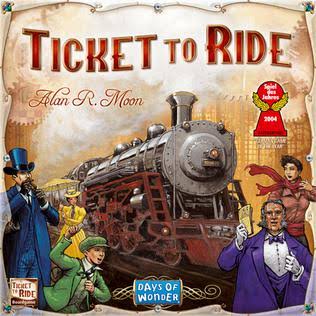
Ticket To Ride 1.82 complexity, 30-60 minute playtime. Players collect cards that let them build train lines connecting cities trying to finish specific routes to gain the most points. When we lived in the South of Portugal we had a weekly game group who wanted to play TTR all the time. The rules are simple, turns are fast, and it’s fun to visually see your routes get completed. This is a good silver bullet game but is more useful when you need something tolerable to play that is extremely simple to teach.
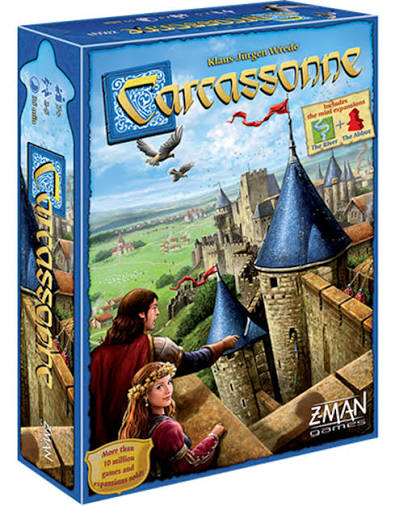
Carcassonne 1.88 complexity, 30-45 minute playtime. Place tiles and claim spaces as players build a map together trying to gain the most points. I really like Carcassonne, can teach it quickly, and most people find it intuitive. It is fun to see new players have an “aha” moment when they realize how they can fight to win a contested space even though at first glance that seems forbidden by the rules. Another silver bullet game and my favorite from the five on this list.
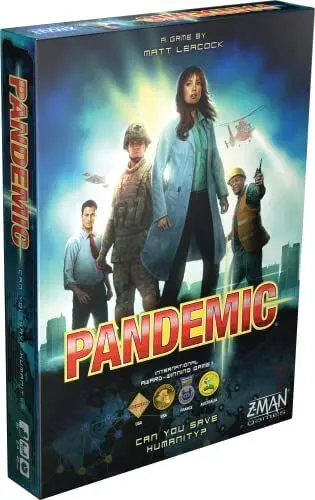
Pandemic 2.39 complexity, 45 minute playtime. Work as a team to stop a global outbreak from becoming a full blown pandemic. I would not have this game on this list for a couple of reasons. First, many people have some level of PTSD post COVID and this game hits just a little too close to home. Second, and more importantly, Pandemic is a cooperative game where one person can run the show and essentially dictate the whole game. This is diminished with a group of experienced players as they work together to solve the puzzle. I’m not saying you shouldn’t have the game in your collection (specifically I’d recommend the Legacy versions if you have a stable game group) but that it shouldn’t be the game you use to bring people into the hobby.
7 Wonders 2.31 complexity, 30 minute playtime. During each of three rounds every player is dealt seven cards which grant various benefits. Each player chooses one card and passes the remaining six to the next player. Everyone reveals their chosen card and gains the benefit listed and then looks at the six cards passed to them, chooses one and the cycle repeats until the final cards of the round are discarded. Whoever has gained the most points (via city improvements and potentially building a wonder of the world) at the end of the game wins. A very simple concept that is fast to teach and has strategic potential along with player interaction. I would not choose to play this game with a casual player even though it meets the above criteria because it is a game you can play without actually understanding what you are doing. As long as someone is making sure you gain the correct benefits you really can just grab a card each round then smile and nod until the game is over. When this occurs a complete lack of player agency can easily lead to boredom and even ennui towards the wonderful hobby of board gaming.
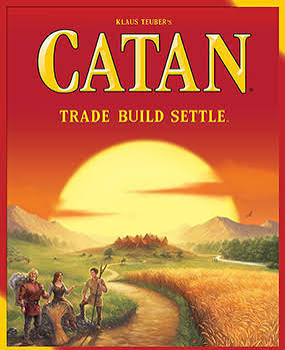
Settlers of Catan 2.28 complexity, 60-120 minute playtime. Over 45 million copies of this game have been sold, almost as many as Candy Land. This is officially a casual game that sits alongside other complex entries in that category like Chess or Scrabble. Catan is more likely to transition someone into becoming a Catan player than an avid board gamer. If you love Catan then introduce it to people, if not I don’t recommend it. It’s a bit too complex, a bit too long, and because of its popularity lacks any sense of discovery for most people.
So, if we have someone we want to introduce to the hobby, what games might come to the table? What are Michelle and I passionate about that we think will entice a casual player to try other, less approachable games, that we REALLY want to play?
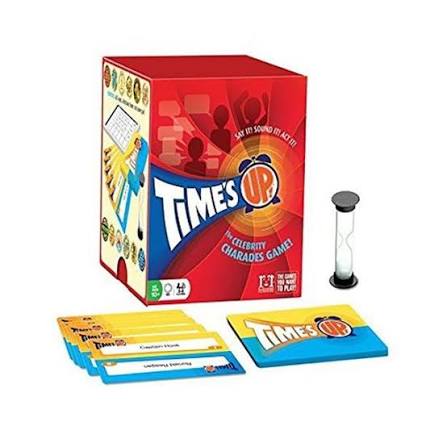
Time’s Up 1.2 complexity, 90 minute playtime. Also known as Celebrity, teams of players race to guess 40 names during frantic 30 second turns. Clues in the first round can be almost any combination of words, sounds, and actions. After all 40 names are guessed the second round begins and clues can only contain a single word (and actions or sounds). Finally, there is a third round using the same names when players can’t say any words. This is a party game at heart that rewards players who pay attention, steal clues, and plan ahead. It is almost guaranteed to get people laughing and having a good time which helps break any hesitancy they have to try other games.
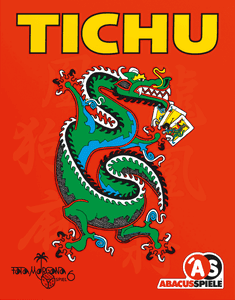
Tichu 2.35 complexity, 30 – 90 minute playtime. Two teams of two players play rounds of cards trying to be the first to win 1000 points. I don’t want to go too in depth about this game here because it will have its own blog post at some point. This game is familiar to anyone who has played traditional card games but subtly adds a couple additional layers of strategy and interaction which make it less predictable and more strategic. Easy to teach and most players grasp the mechanics after a quick practice hand or two. We absolutely love this game and have replaced our decks of cards three times.
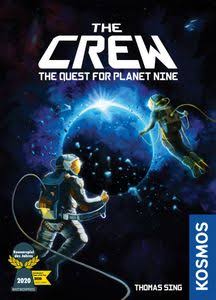
The Crew: The Quest for Planet Nine 1.97 complexity, 20 minute playtime. A cooperative trick taking card game with variable and increasingly difficult goals that players try to accomplish together. Simpler than Pandemic and each player has to manage their own hand of cards to achieve the group goals.
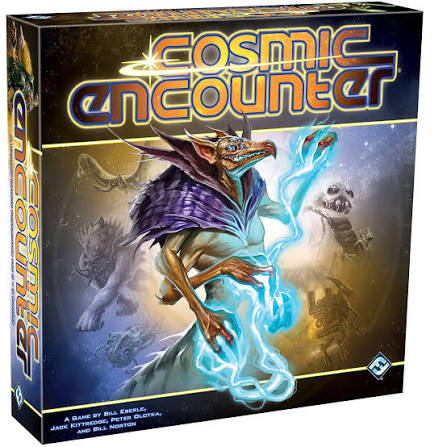
Cosmic Encounter 2.58 complexity, 60-120 minute playtime. Players each lead a unique alien race that has a special power. They race to be the first to inhabit five planets outside their home galaxy using their powers but also, most importantly, use crafty negotiation with the other players. Most casual games lack player interaction and Cosmic Encounter is the opposite, a game built on leveraging traditional advantages (more powerful cards or a stronger special power) with interpersonal bargaining at the heart of every turn. For a casual gamer a session of this screams “there is more out there than you ever imagined!” and I want to play games with someone who gets excited by that potential.
Now I’m going to throw out two examples that will make you think I’m insane, but give me a minute to explain myself.
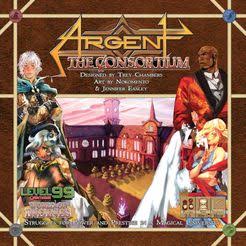
Argent: The Consortium 3.75 complexity, 60-150 minute playtime. If I know someone loves wizard shit (like Harry Potter) I know they will inherently enjoy Argent. You can read a detailed write up about what the game is HERE. The reason it fits the role of gateway game at my table is because of how things build up over time. The game starts out with a limited set of options for each player, they have a single spell and on their turn they are just sending one of their five mages out to gain money, mana, or other bonuses. By the halfway point players have a handful of spells they can cast and items they can use, but each of these things have been added incrementally in a way which doesn’t feel overwhelming. By the end most players are fully immersed in the battle and are flinging spells and counterspells in what is an extremely complex game, but they didn’t notice any increase in difficulty because they were having fun the entire time.
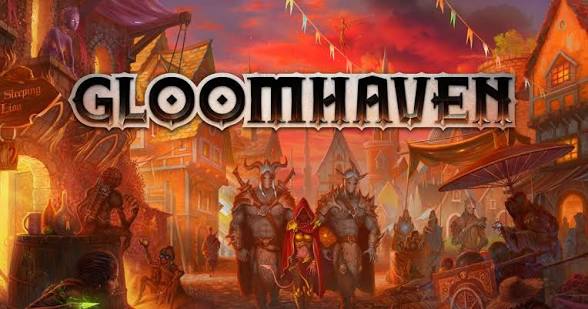
Gloomhaven (or Jaws of the Lion) 3.92 complexity, 60 – 120 minute playtime. This is for those people who I know dabbled in D&D or even just expressed interest in that type of game because they watched Stranger Things. This game will be featured in detail in a blogpost later this year (M and I have almost finished our “playthrough”). Players each control a hero as they cooperate to fight off monsters and accomplish specific goals to win missions. Over multiple games the heroes get more powerful and have more options, but the challenges they face also increase. If the person or people running the game know how to play (so they can run the monsters and help explain the fiddly rules when necessary) this is a relatively easy game to explain to a new player. Most of the complexity is behind the scenes and only needs to be explained once your casual friend is hooked. Don’t believe me? Come over to the house and play a few rounds with Michelle and I!
That’s it, hopefully the earworm will leave me now. If you want other people to love games show them the games you love, not the ones you think will magically convert them into hobbyists. We had a group of friends who were all in their seventies that we played games with weekly, usually Dominos or Ticket to Ride. Because we were willing to play those games which they enjoyed, they happily tried all manner of other games (Merchant of Venus, Lunar Rails, and Tzolk’in to name a few) but nobody was expecting a new addiction, we just all wanted to see our friends have a good time.
Have you found your gateway game? What was it?!? Share in the comments and keep the focus on having fun in all your gaming sessions.


2 responses to “A Geeky Discussion About “Gateway Games””
Unfortunately for me, Scott isn’t into playing games. I have to twist his arm to play two person 500 or Yahtzee. I know these can be mind numbing. Scott loves to sky dive, which he will be doing on the 20th without me. There is no way I would jump from a plane. Oh well. You both have a blessed marriage and life. Love, Aunt Peggy
We are very fortunate to share most of the same hobbies, especially boardgaming since it provides such a variety of possibilities. I don’t think I’d be interested in skydiving either, but we have done a bunch of other fun outdoor stuff like rappelling and zip lining.