
Last week Michelle talked about how when we look for new board games we try to find a gap in our collection. A good example is that I love space themes and gravitate towards them so they are over represented. We track our games on a Google sheet so we can quickly pick out a game based on category (party, strategy, card, worker placement, etc.), play time, number of players, or weight. Today I’m going to talk about that last specification, weight, which when talking about board games refers to complexity and not kilograms.
Our list uses the weight ranking found on Board Game Geek (BGG) which is based solely on community polling. In this post I want to look at what the criteria on that site are supposed to be, discuss how that matches with my thoughts on weight, then look at some specific examples. Ultimately I want to discuss why I think most people should be less afraid of complexity in games and embrace new challenges when boardgaming.
BGG lists six possible criteria when gauging a game’s weight, but also notes that this is an extremely subjective topic. Users pick one of five categories when they assign a weight to a game (light, medium light, medium, medium heavy, and heavy) but the site doesn’t give specific examples of what game fits where in this chart. I believe that this categorization is almost an afterthought on BGG because in different areas such as the overall ranking of games the website designers are hyper-focused on accuracy and fighting various types of bias.
- How complex/thick is the rulebook? How long does it take to learn the rules? This criteria is totally valid and makes sense to anyone who has read more than a handful of rulebooks.
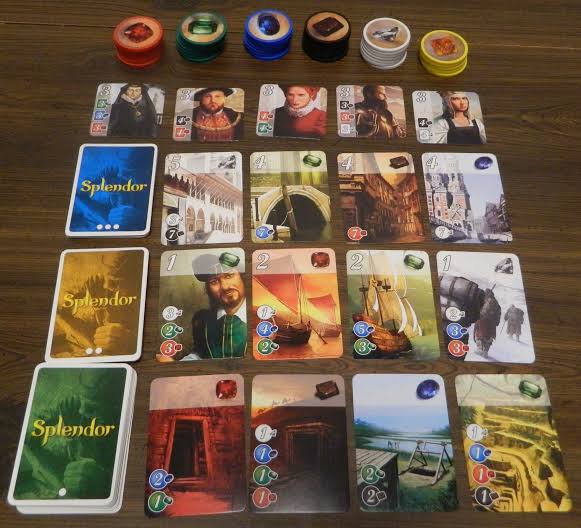
- What proportion of time is spent thinking and planning instead of resolving actions? I understand the intent here, however, this varies immensely based on individual tendencies and familiarity with a game. Some players have “analysis paralysis” which means they consistently over analyze decisions in the games they play, often significantly increasing play time. Also, the first 2-3 times you play a game turns will take longer since you have to explore each new situation you encounter and double check the rulebook for things which will soon become second nature. Finally, when playing a game with fewer players you have less time to strategize and at two players even a simple game like Splendor will require a very short think break since your turns will come around every few seconds.
- How hard and long do you have to think to improve your chance of winning? I believe this is very close to the heart of the equation. Often people will say they just want to play something mindless, especially after a hard workday or a stressful week. They either want a very light weight game or one they are already familiar with. When we ran 24 hour gaming marathon sessions we realized that heavy games should be played early and then we would transition to simpler games or party games to help people with the final push when exhaustion was at its peak.
- How little randomness is in the game? I despise this criteria. Randomness can change a game from being strategic to tactical but in and of itself does not impact the weight of a game. A more reasonable question might be “How much impact do your actions have on the outcome of the game?”
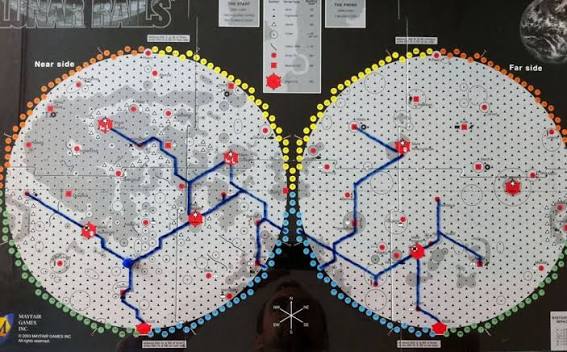
- How much technical skill (math, reading ahead moves, etc.) is necessary? This is, in my opinion, an edge case which is already covered by “How hard do you have to think…”. Although some games (Lunar Rails or Power Grid for example) do require some basic math and planning I don’t believe this increases their weight beyond the existing complexity of the other rules. In other words, I find it exceptionally uncommon that a person would be capable of understanding the other rules in a given game but then be frustrated by an inherent technical requirement.
- How many times do you need to play before you feel like you “get” the game? Fair enough. This is especially apt in catching games with a high mastery ceiling like Chess or Go.

Before I start diving into specific games I want to really define my viewpoint on game weight. I learn by reading rulebooks and enjoy that process. Because of this I’ve been the default rule explainer for many of the games I’ve played over the years. For me a massive component of weight not directly touched on by the above criteria is how hard or easy it is to teach a game to other players. The reason I’d make this argument is that the majority of players in games don’t need to know and understand everything that the explainer does. A rulebook might have four pages explaining a complex setup, but I’ll be the only person who has to worry about that. The explainer needs to understand all the phases of the game up front, but only needs to be able to explain the basics to the other players so they can adequately plan ahead strategically. I feel confident saying that most players don’t ever want to touch a rulebook.
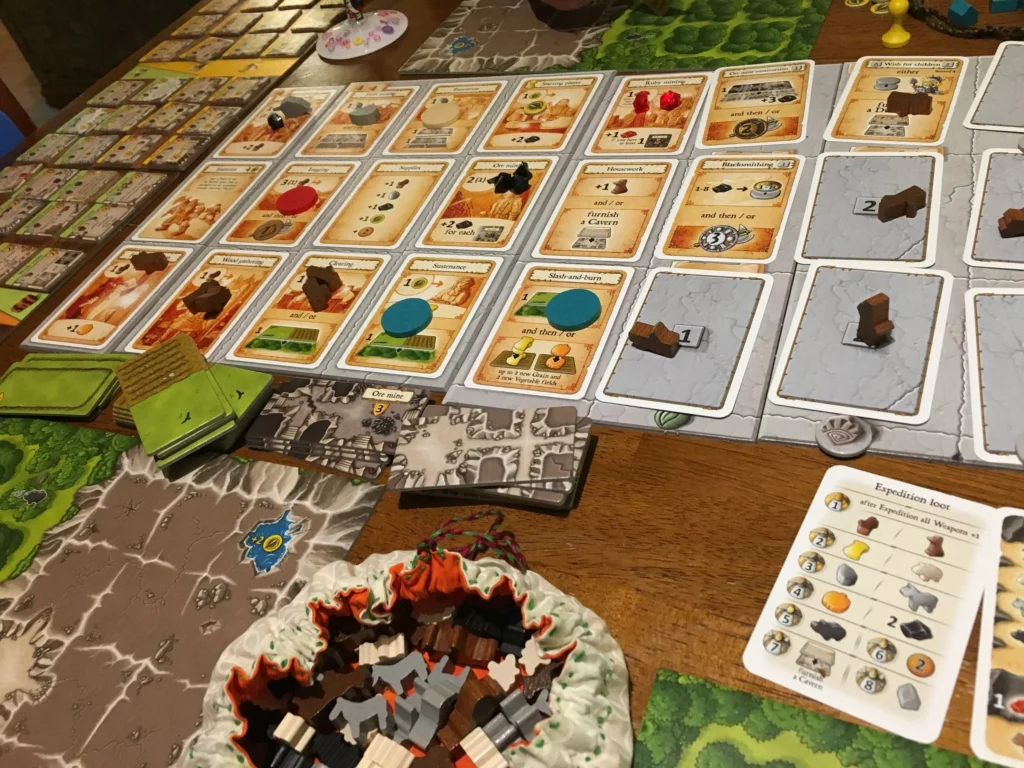
I have taught a 10 year old how to play Caverna (3.79) and they were able to understand the rules and play straight away. Let me dive through some games and see what I think about their BGG weight.
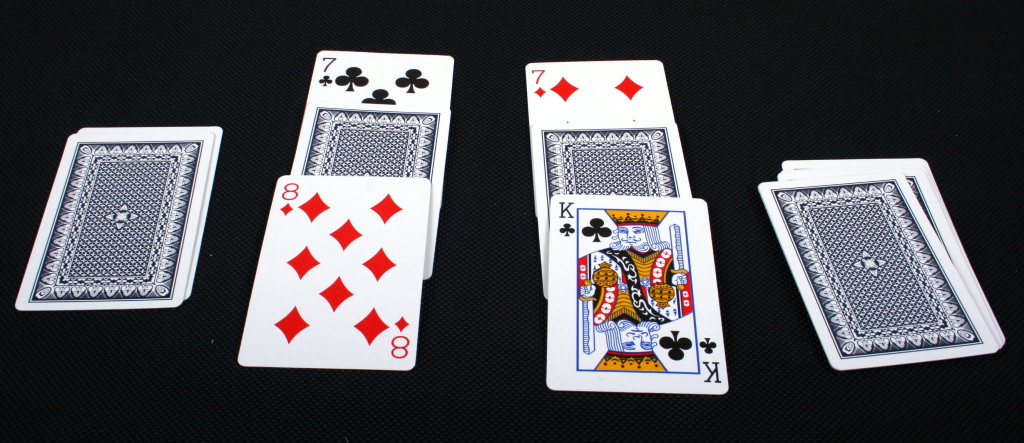
War (1.01). We all played this at some point for some reason. Split a deck of cards into two and flip cards at the same time, the highest card wins both cards. If there is a tie you both add 2-3 prize cards and flip again to see who wins the piles. Repeat until someone has all the cards. Mindless and can be taught in under a minute.
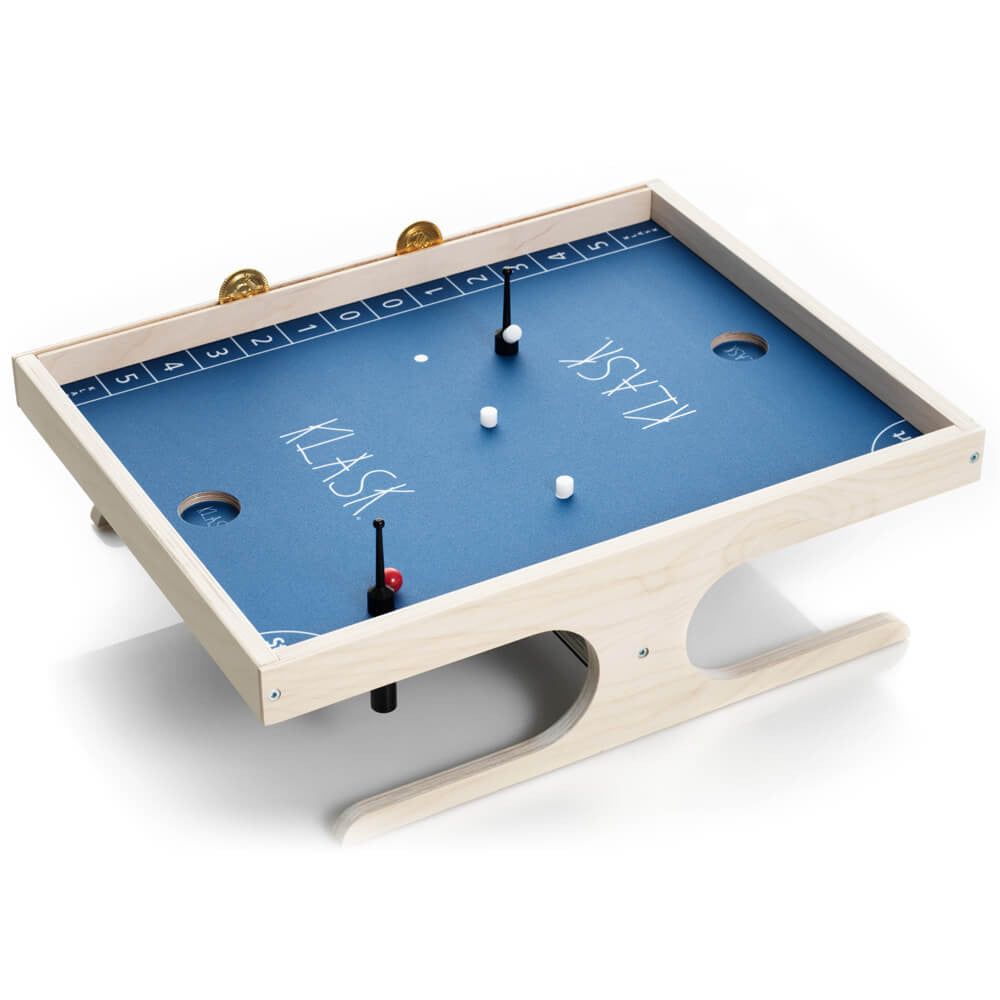
KLASK (1.05). A great dexterity game with magnets that plays a lot like air hockey. I just taught this and it takes about two minutes. Even though it is very easy there are four different ways a player can score and multiple small but important rules that everyone needs to know to play.
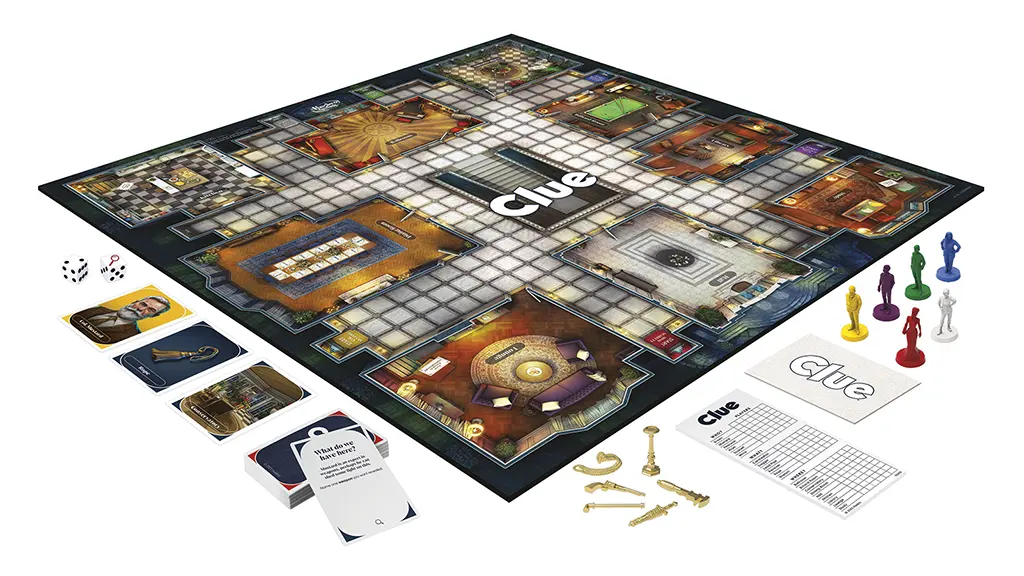
Clue (1.64). Players try to deduce the who/what/where of a murder by moving a pawn around the board and making suggestions which other players can potentially disprove. If someone thinks they know the correct solution they can make an official guess and win if they are right. Requires logic and players can incorporate basic strategy (for example suggesting a weapon which they themselves could disprove) to solve the mystery faster and confuse other players. Usually very simple and good for children but Michelle did try to teach this to adults last year and at least one of them remained confused for the whole game.
Red 7 (1.70). Designed by Carl Chudyk this is the first entry on my list where I have to look askew at the rating. This game has a complexity of the unfamiliar. The basic “simple” rule confounds most players for at least one game – you play one or two cards from your hand and you must be winning the game at the end of your turn or you are eliminated. The rules change rapidly, running out of cards leads to a loss, and making correct tactical decisions is necessary to win. Even experienced board gamers have a hard time catching on at first because the game system and how you use cards is unusual. Saying that Checkers (1.71) is heavier is simply incorrect using most any metric.
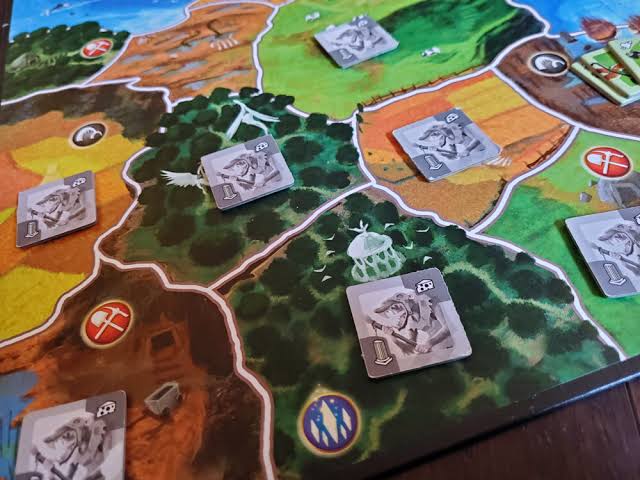
Small World (2.35). The range around 2.5 is filled with games that have relatively simple rules with lots of exceptions. Small World is a wonderful example. You get to pick a mythical race who has a random magical power (for example Flying Dwarves) and try to take and hold as much territory as possible. As the game continues you will need to choose the right time to abandon your existing race and pick a new one. I don’t necessarily disagree with this rating and think that there are many excellent games that fall into this category on BGG. These tend to be easy to teach but have enough strategy and/or tactics to ensure that the best player will usually win.
After Dinner Trivia (3.0). A bunch of trivia questions that people can ask each other after dinner, some versions have a scorepad. Why is this rated 3? Because a single BGG user logged that difficulty. But were they wrong? Trivia is a technical skill I guess, so maybe they gave a heavy weight to that criteria (ha).
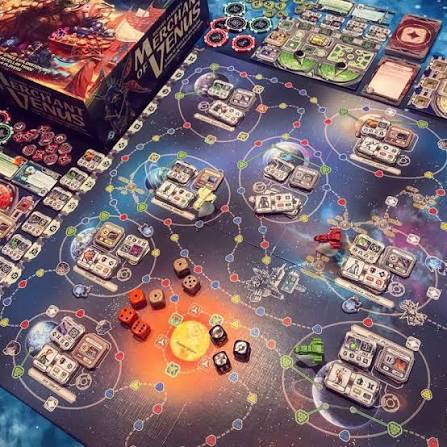
Merchant of Venus (3.07). Fly around space picking up and delivering goods after discovering the secrets of a solar system. Has a complex setup but the general rules can be explained easily. The difficulty definitely comes from the planning phase where you must optimally pick your routes to ensure the most profit. I agree with this complexity rating.
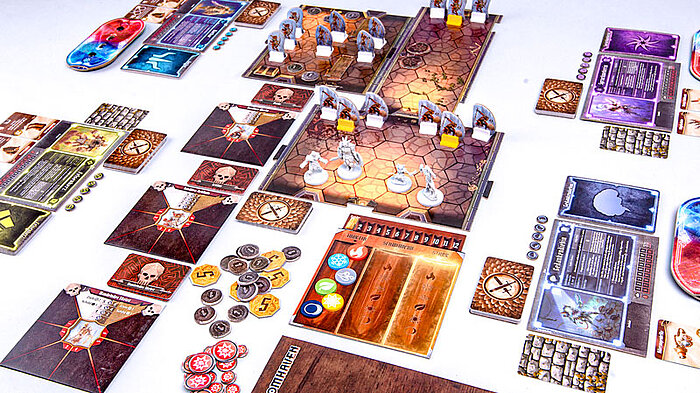
Gloomhaven (3.91). A massive rulebook, what feels like hundreds of exceptions, systems built upon other systems in a generally cohesive but also complicated manner. Even after 200 or so hours of playing this game I still find myself Googling rule questions almost every time Michelle and I sit down to play. We love the game but it can be fiddly. On the other hand I can teach a new player the basics and get them up and running with a character quite quickly. As a game runner I agree with the rating but I also hope that if I taught someone to play they would put it into a 3.5 range because their experience should not be frustrating if I’m doing my job.
Go (3.91). An example of a classic game with relatively easy to learn rules but immensely deep strategic gameplay. Following BGG’s criteria this is probably in the right spot, but I’ll discuss below why I disagree.
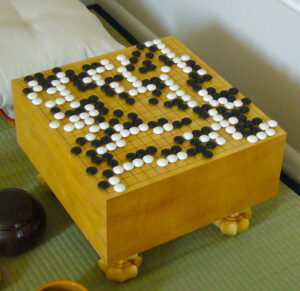
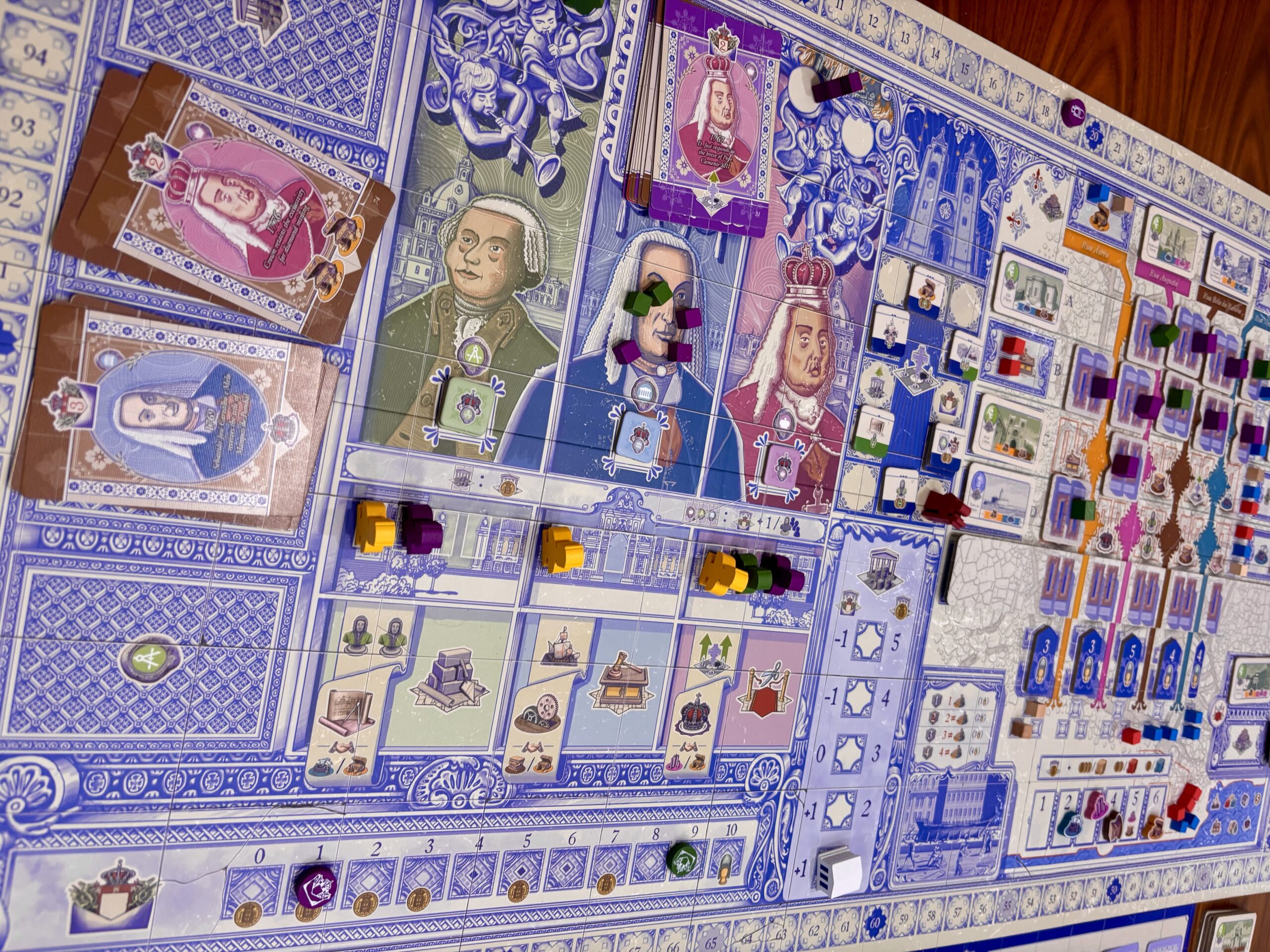
Lisboa (4.57). The reason I started this list. Lisboa is not harder to learn than Mage Knight (4.37) or even Gloomhaven. The rule book was hard to follow on my first read through but after we started playing it only took a few turns to understand the basic concepts. By the end of the game we understood how the parts of the game fit together and were excited to play again so we could start focusing on strategy. You might argue that the reason for the high ranking is based on the strategic depth but I would counterpoint with Go, a game that literally takes a lifetime to master, which sits over half a point lower on the weight scale.

Now that we’ve seen a wide gamut of games with different weights I’m going to breakdown what I see as the main problems with the BGG scale. First is the ownership pool. Red 7 is probably being skipped over by casual gamers in favor of Uno, meaning that the people who buy it are more likely to be familiar with complex rules and are rating it in comparison to their collection which inherently pushes this game down on the scale. Lisboa on the other hand has amazing visual appeal. I theorize that many people bought the game because of the art or theme who are coming from that 2.5 weight range (or lower) and skipping right over things that come in around 3.0. I think it actually should lie between 3.7 and 3.9 when compared to other games on the site.
The second thing I think impacts the ratings is confirmation bias. People hear a game is hard or easy and will sway their vote to match the trend. If I taught Go to a group of people who didn’t have any preconceived ideas about the game and they played each other for a month I doubt that they would rate the game above a 3.0. The complexity is based on the external knowledge about the upper skill limits. This same consideration simply doesn’t exist for the vast majority of modern games because there is not a massive competitive scene for them.
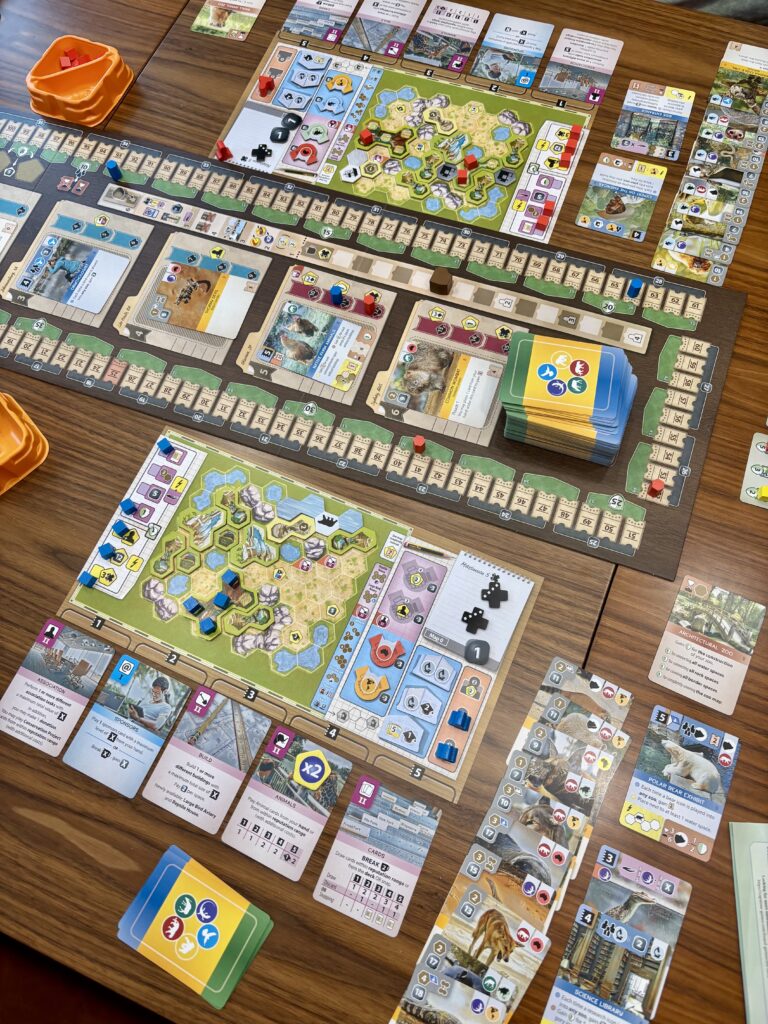
The final problem with the scale is that it doesn’t differentiate between the teacher of the game and players of the game. I don’t know how you would break this down better but it is something worth considering. Michelle and I learned Ark Nova by reading the lengthy rulebook together, it probably took two hours. I taught friends how to play verbally in about 20-30 minutes and we were able to start playing with no significant problems. Whose learning experience is more pertinent when deciding an overall weight of a game?
This circles me back to my initial proposition that people should not shy away from new games because of complexity. If you aren’t the person who is good at reading rulebooks there are nearly unlimited resources available for free online. Publishers and game reviewers put out how to play videos and there are many excellent channels on YouTube teaching different games. If you have read this far you likely do play some board games and in that case already know the person in your group who “teaches the games”. Ask them if they’d feel comfortable teaching a game you are interested in, they would probably love to take a shot at learning it! Push your limits and make sure to give any new games at least two full plays before you write them off. You might find a new appreciation for complexity, strategy, and deep tactics.

