
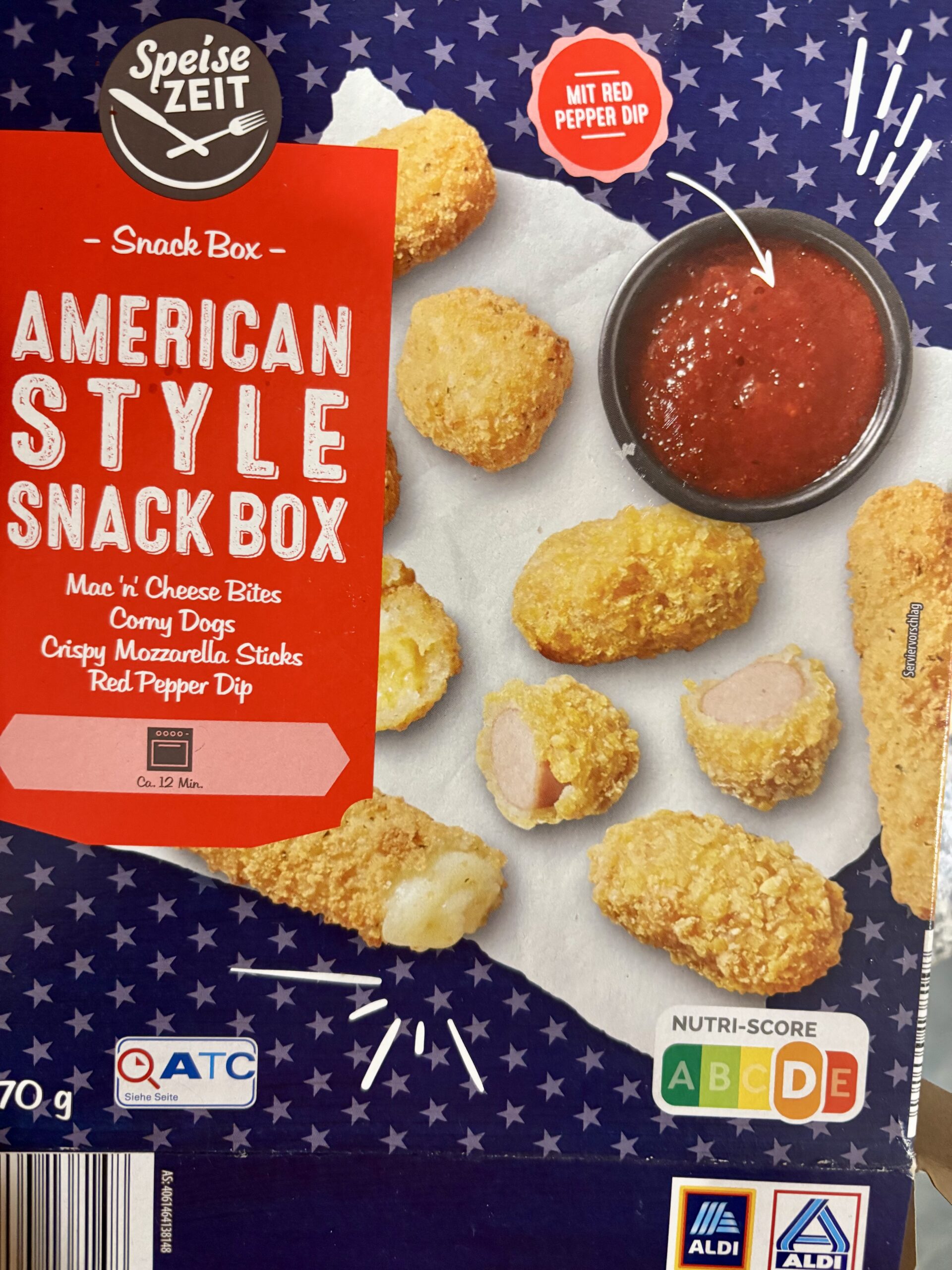
A very common question and discussion I’ve had multiple times since moving is “What things are hard to find at a Portuguese grocery store?”
Oddly enough at least half of these conversations have been with other people who have also moved to the country. I’ve heard multiple strange stories about the lack of peanut butter in Portugal even though I can get a jar at any grocery store. This post isn’t about that.
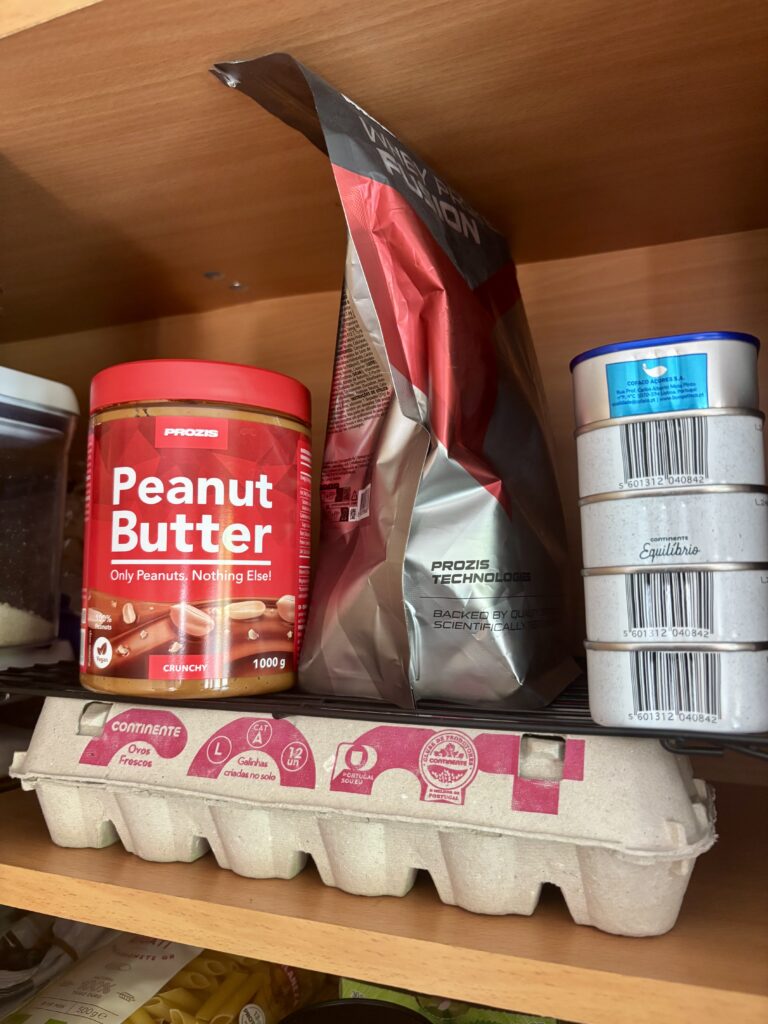
When I was talking to someone (Hi Mom!) about this topic they asked me about the opposite , “What would a Portuguese person in the United States find confusing while at the grocery store?”
Obviously they won’t find a good old “American Style Snack Box” but there are some other things that will immediately stand out!
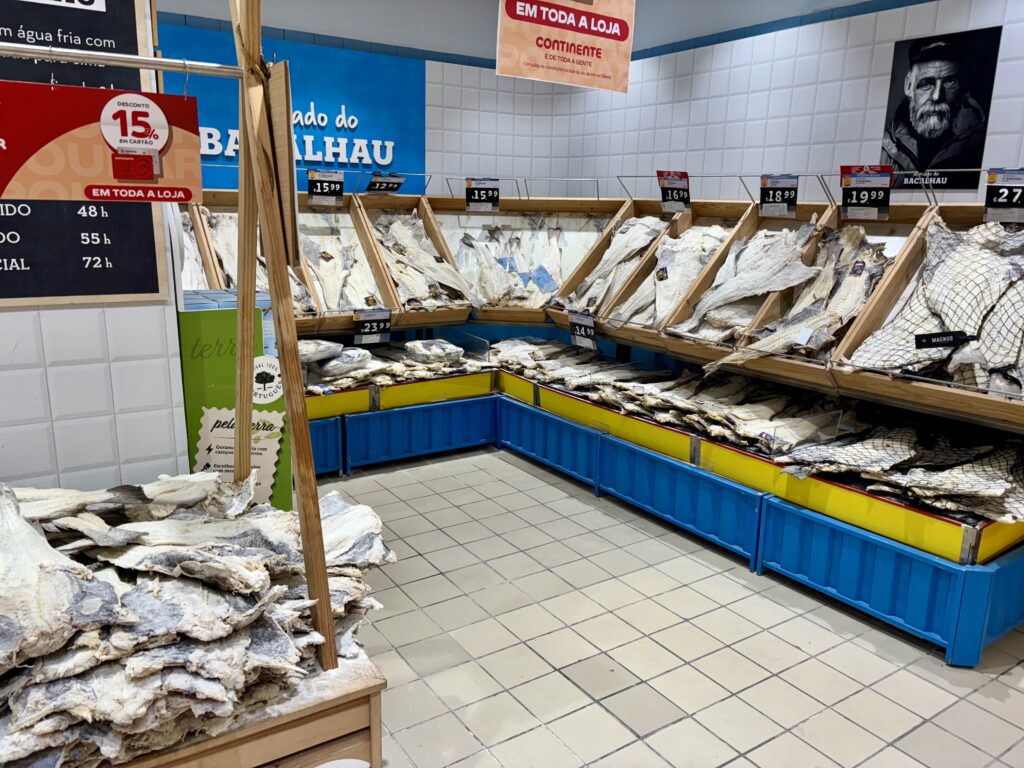
First, and easiest, is that there won’t be a section devoted to bacalhau, the dried salted cod that is the national dish of Portugal. These huge slabs of dried fish call out to shoppers with a pungent smell that I barely even notice anymore. Although I’ve eaten bacalhau many times I can’t say that I’ve ever bought and rehydrated a slab of my own yet.
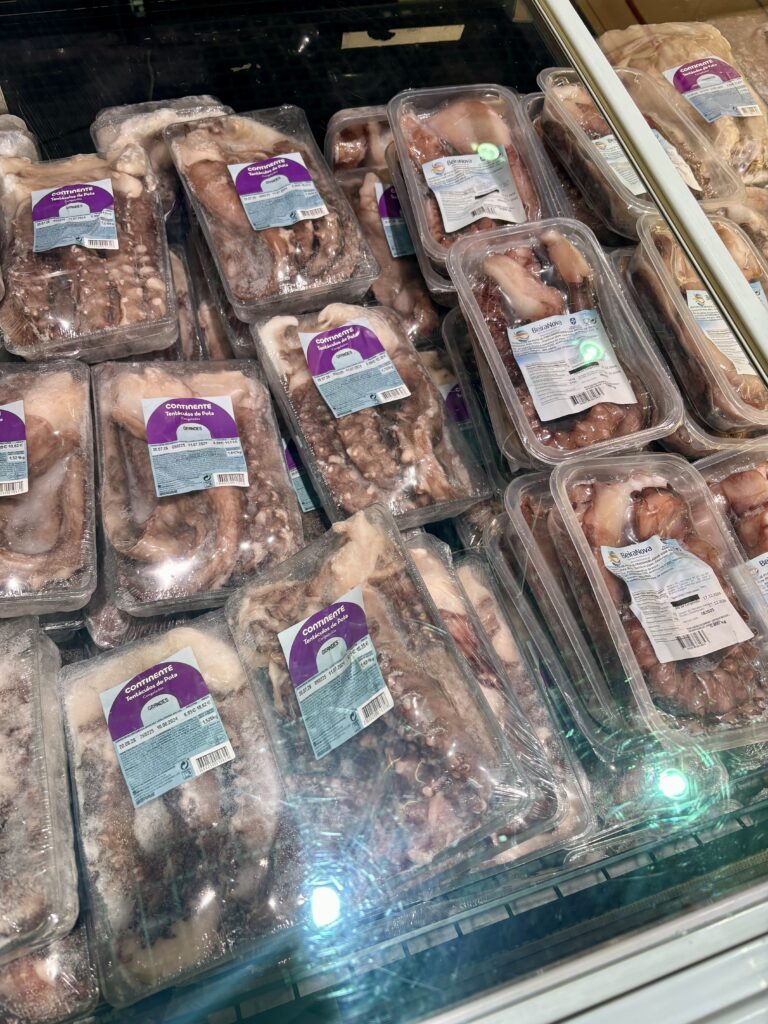
In general, lack of specific types of fish would be a major difference throughout the grocery store. Frozen sections here usually have a whole row or sometimes a complete display, dedicated to all types of seafood. The discerning Portuguese shopper would be wandering around most markets in the States looking for the frozen octopus section until the end of their days.
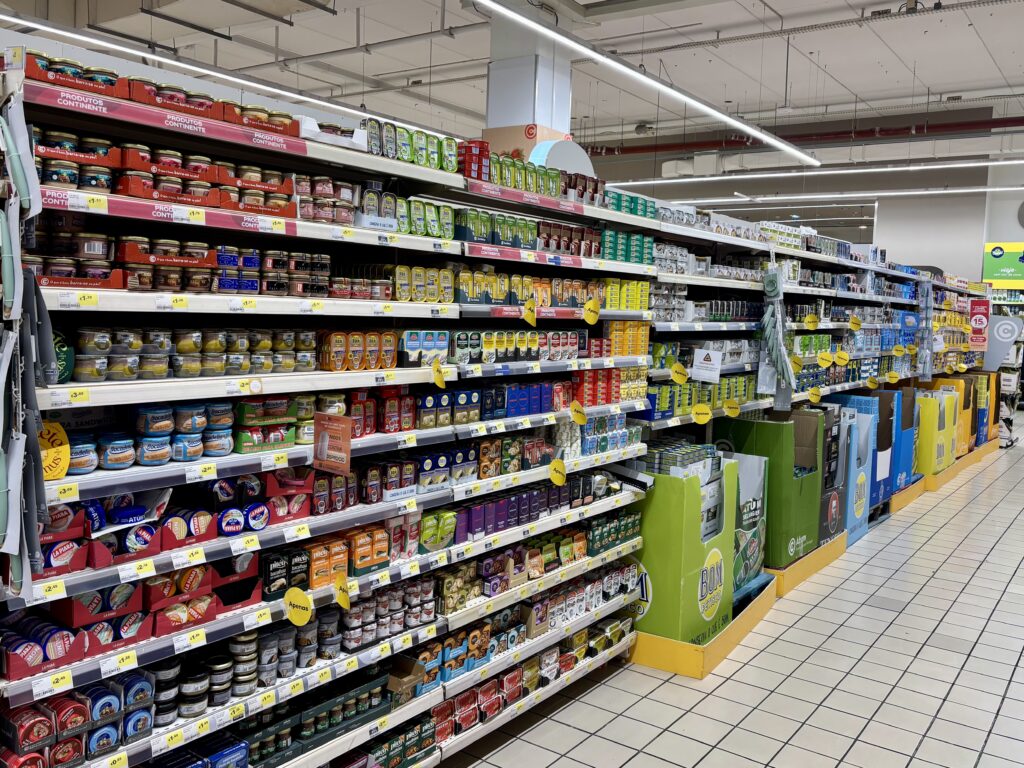
We will end our seafood section with tinned, canned, and jarred fish. Tuna, sardines, and various fish pates are all staples of the Portuguese diet and the volume and variety in every grocery store reflects that. This section in a grocery store is normally a full row, as shown in the following picture.
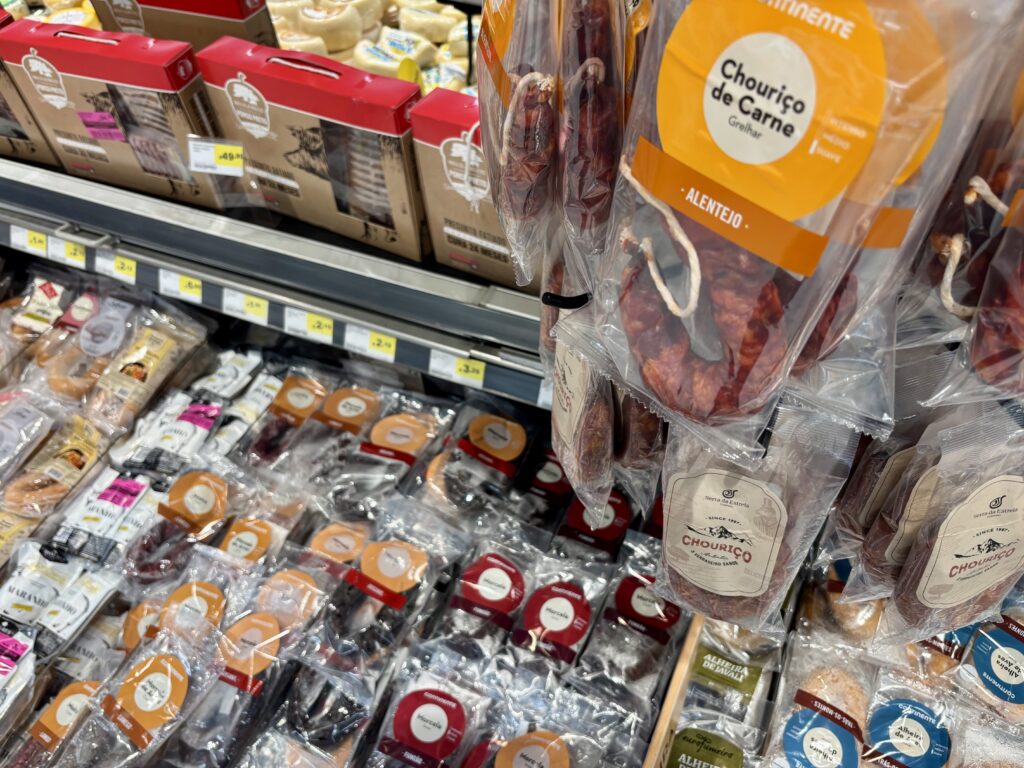
As much as I gripe about the lack of various hot dogs and sausages that are common in the United States, our imaginary Portuguese person would complain about the following. First, chorizo is common and comes in countless varieties made throughout Portugal and Spain. There are usually at least two sections devoted to this type of sausage in every store (refrigerated and non).
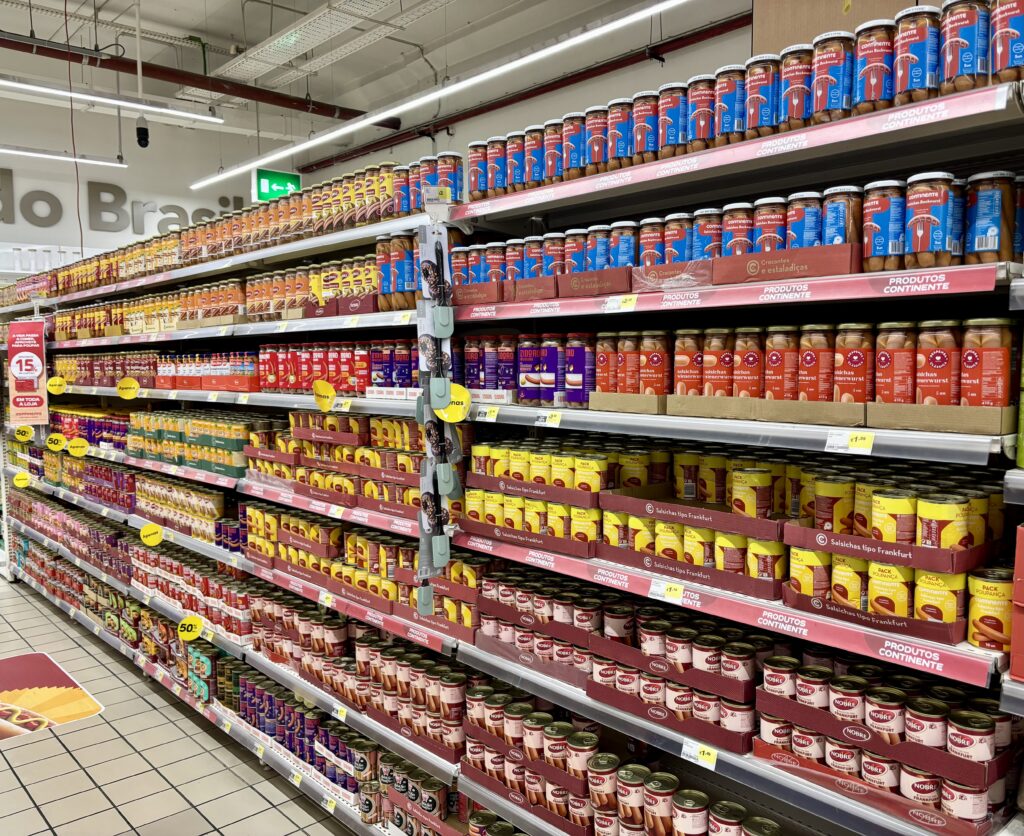
I have no complaints about chorizo and once in a blue moon I’ve even run into a bratwurst. Plain old yummy hot dogs though, that’s a different story. For some reason hot dogs here in Portugal usually come in a jar or can. They have a texture much closer to baby food than I ever want from a sausage. They ARE horribly popular. In the States our imaginary Portuguese friend would spend a lot of time wandering the jar aisles looking for the sausage section.
I’m going to continue my hot dog tangent for a minute here. Michelle mocks me because I am constantly tricked into thinking I’m going to get a yummy hot dog here in Portugal. We’ve recently started playing board games at a restaurant literally called The King of Hot Dogs (O Rei dos Cachorros) and I was so excited the first time we went. I hadn’t seen anyone else eating when I eagerly put in my order for one king dog. I was salivating and confused about how Michelle could possibly pass up getting her own dog. I told her I’d share (of course) while secretly planning on ordering a second dog since she’d obviously want to scarf at least one on her own.
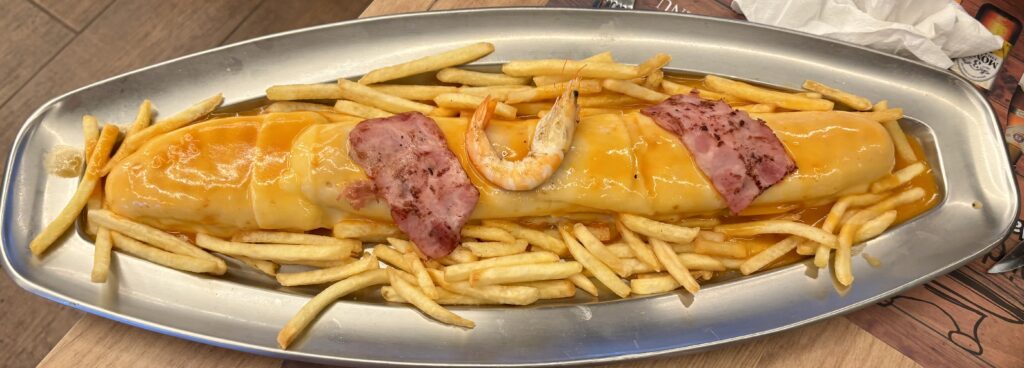
And then this arrived. It was about two feet of jarred hot dogs (and some other meats) rolled into a not-unlike hot dog bun bread, covered in beer sauce and crowned with a single shrimp. Michelle ate a couple french fries and I managed to eat almost the whole thing – a just dessert for being fooled once again.
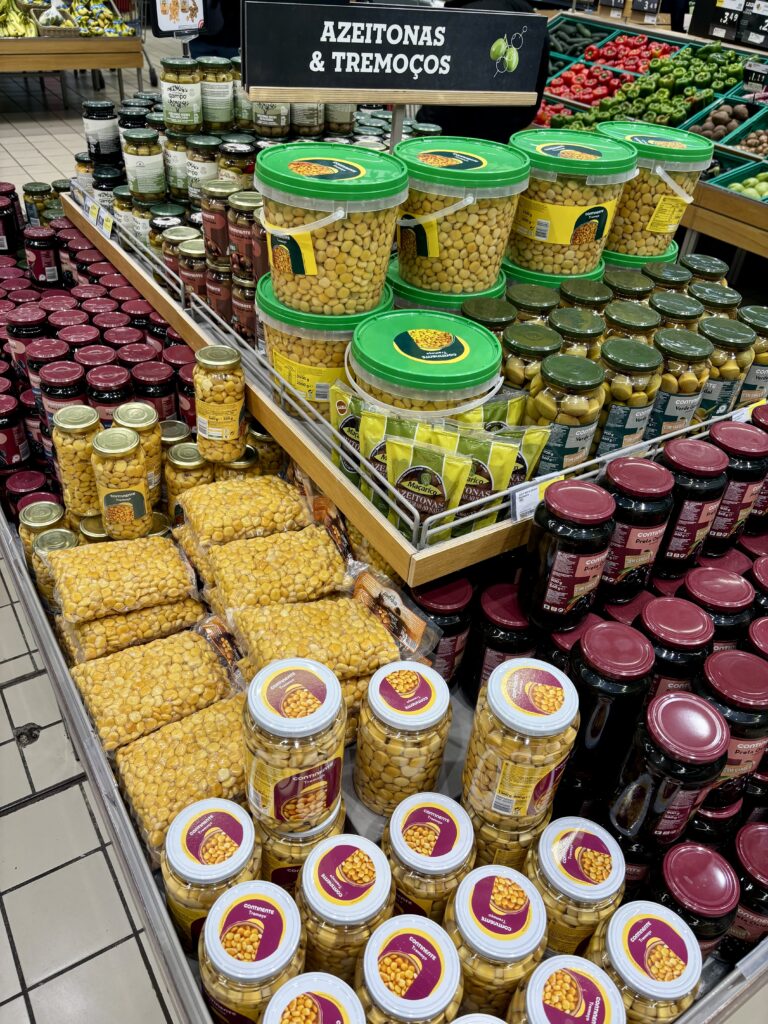
Now we’ll wrap up with a few smaller things. First, tremoços are a common snack here which we love. They are lupini beans which you eat by biting the edge and popping the yummy center into your mouth, normally discarding the outer skin which is edible but not easily digestible. We almost always have a jar in our fridge.
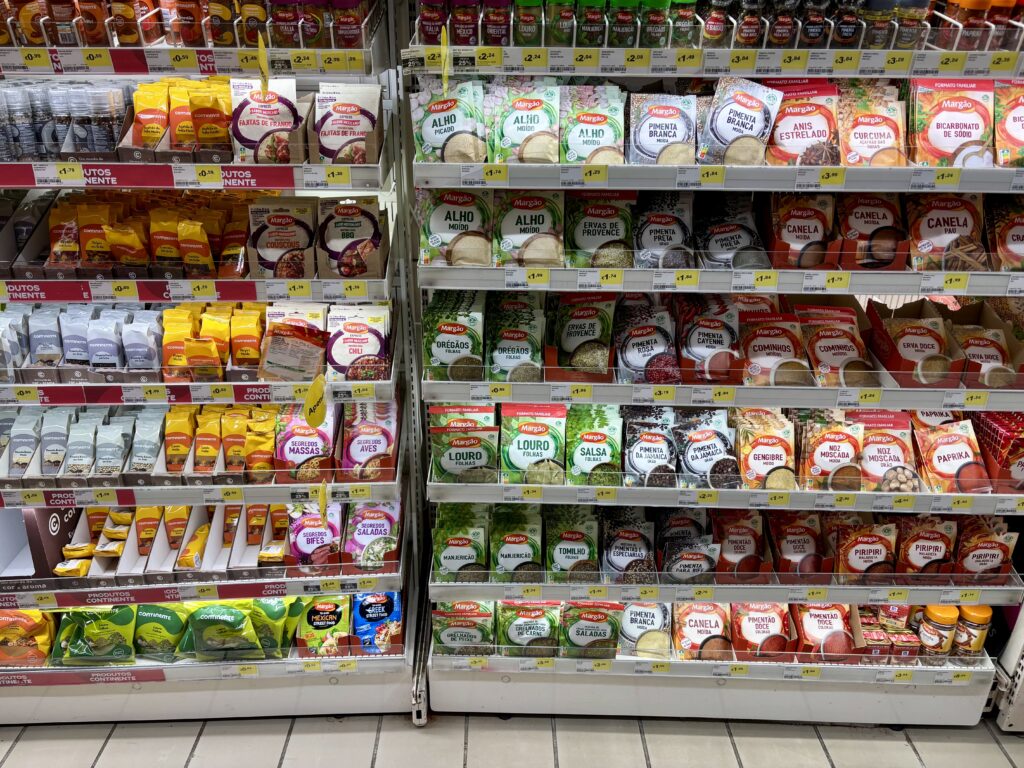
A small difference is that dried herbs can be found in jars but they are more often bought in paper packets. This totally makes sense since one packet can be used to refill a jar and seems way more ecologically sound. Smaller grocery stores will have herb and spice displays with only paper packets and no jars.
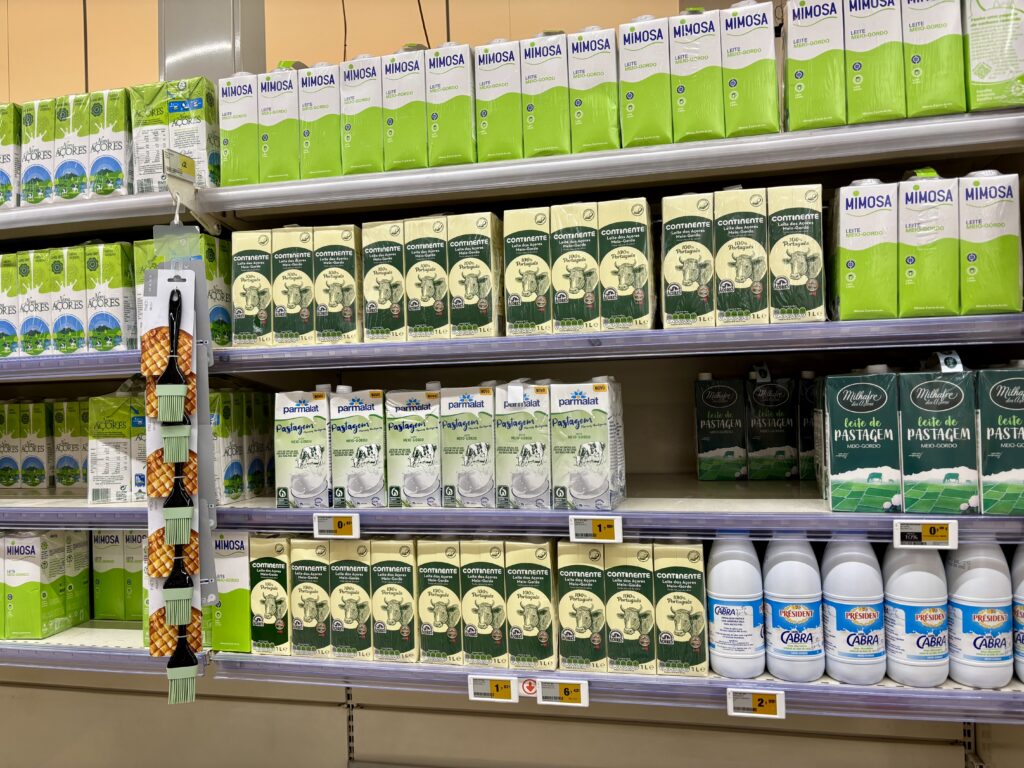
And finally, most of Europe uses ultra high temp pasteurization which makes refrigeration of eggs and unopened milk/cream unnecessary. In areas with lots of tourists there may be a few sketchy jugs of milk in the refrigerator section near the yogurt since many Americans swear that there is a massive taste difference and won’t drink the boxed products (I disagree, tastes fine as far as I can tell, but I did drink powdered milk for a year in Alaska so maybe I’m a bad judge).
These are a few of the major differences I could think of. If you have found yourself in both a Portuguese and U.S. grocery store and can think of anything I missed give it a mention in the comments. Not including specific name brands, I think you can find 95% of the same things in either store, sometimes in a different section or with more or less variety then you might prefer.


6 responses to “Finding The Tinned Fish”
I must say, sardines must be so popular because there was literally a tourist store in Porto selling nothing but sardines in cans. Like, artful sardines … in their tin cans. I should’ve brought David some home but alas just brought boring chocolate in the shape of a fish.
They are so popular, throughout the whole country. Normally they are cooked fresh directly on a hot grill and served whole or with flatbread. At very fancy places they might be cleaned and served on a salad but that is very uncommon.
Most households have tinned fish to supplement or make a quick meal. Including ours!
Thanks for taking your time to write this wonderful blog. I look forward to the next post. Aunt Peggy
We’ve been slacking but should have some posts in the upcoming weeks. Thanks as always for your kind comments Aunt Peggy!
The first thing that jumped out was the Nutri-Score right on the front of the package. By Europe’s standards, probably the majority of US food would be D/F.
I only occasionally have it (too greasy), but I enjoy a good chorizo from time to time. Either cooking it into scrambled eggs or using it in a sausage/mushroom/rice dish in place of traditional sausage.
I agree about the greasiness. I think all processed food here in the EU needs the Nutri-Score, including things like breakfast cereal. It is helpful when in the store to get an idea at a glance. For a variety of reasons processed food, especially for main courses, is much less common here.